Comprehensive Guide to Variable Frequency Drive Circuit Diagram: Components, Applications & Innovations
Understanding the Variable Frequency Drive Circuit Diagram
In this fast-evolving industrial world, the variable frequency drive circuit diagram plays a surprisingly pivotal role. If you’ve ever wondered how electric motors get the precise torque and speeds they need in diverse applications — from conveyor belts in factories to HVAC systems in skyscrapers — then you’ve already stumbled upon the field where VFD (variable frequency drive) diagrams come alive. Globally, energy efficiency and motor control are critical, and understanding these circuit diagrams helps engineers design systems that are reliable, scalable, and sustainable.
Why This Matters Globally
According to the International Energy Agency (IEA), industrial electric motors consume nearly half of all electricity worldwide. Controlling these motors efficiently not only cuts costs but also reduces greenhouse gas emissions significantly. Variable frequency drives (VFDs) — and the circuit diagrams behind them — make this possible by adjusting motor speed based on demand rather than running at full speed all the time. For reference, the ISO 50001 standard highlights how energy management systems, often incorporating VFDs, lead to sustained energy savings.
Yet, despite their importance, understanding the precise circuit layout and intricacies behind VFDs still poses a challenge for many newcomers. That’s why diving into the variable frequency drive circuit diagram can unlock knowledge that empowers better designs, troubleshooting, and innovation.
Defining the Variable Frequency Drive Circuit Diagram
Put simply: a variable frequency drive circuit diagram is a schematic that illustrates how VFD circuits control alternating current (AC) motors by varying the frequency and voltage supplied. This circuit typically includes components like rectifiers, inverters, filters, and controllers. These parts collectively modulate power in a way that allows smooth motor operation with adjustable speed and torque.
From a humanitarian or industrial perspective, these diagrams support the design and maintenance of systems that are vital in water treatment, agricultural irrigation, manufacturing automation, and even aid in remote power optimization — helping communities and industries alike.
Core Components of a Variable Frequency Drive Circuit Diagram
1. Power Supply & Rectifier
This converts incoming AC power into DC, which is essential for further manipulation. The rectifier stage often contains diodes or controlled thyristors — quite interesting because it’s the gateway to all subsequent processes.
2. DC Bus & Filters
The DC bus stores and smooths the rectified current using capacitors and inductors, ensuring minimal ripple and stable voltage. Stability here is crucial for avoiding motor control errors.
3. Inverter Section
Arguably the heart of the circuit, the inverter converts DC back to adjustable frequency AC using switching devices like IGBTs (Insulated Gate Bipolar Transistors). It determines the motor speed by varying frequency and voltage.
4. Control Circuit
Integrated microcontrollers or DSPs manage the VFD operation according to input commands or sensor feedback. This layer optimizes performance and protects against faults.
5. Protection & Feedback Systems
Overvoltage, overcurrent, and thermal sensors ensure safe operation, while encoders or tachometers provide feedback for closed-loop control.
Mini Takeaway:
Understanding the elements of a variable frequency drive circuit diagram equips engineers with the know-how to design more energy-efficient, adaptable motor systems — a win-win for productivity and sustainability.
Product Specification Table: Example VFD Circuit Module
| Specification | Details |
|---|---|
| Input Voltage | 380 V AC, 3-phase |
| Output Frequency Range | 0.1 Hz to 400 Hz |
| Power Rating | 7.5 kW |
| Control Method | Sensorless Vector Control |
| Protection Features | Overcurrent, Overvoltage, Motor Thermal Protection |
Global Applications: Where and Who
Variable frequency drive circuits or their diagrams are indispensable in sectors everywhere. In heavy manufacturing hubs — like Germany’s automotive plants or China’s electrical factories — they help control conveyor speeds, reduce energy consumption, and improve safety. Oddly enough, in remote rural areas of Africa and Asia, solar-powered VFDs facilitate water pumping for irrigation, directly impacting food security.
Post-disaster scenarios often benefit from mobile generators with VFDs, where adjusting motor speeds helps manage limited fuel efficiently. Organizations such as the UN’s Sustainable Energy for All initiative emphasize such technologies to support resilient infrastructure globally. variable frequency drive circuit diagram knowledge is crucial here for engineers designing sustainable aid solutions.
Vendor Comparison Table: Popular VFD Circuit Diagram Kits
| Vendor | Model | Power Range | Control Type | Price Range |
|---|---|---|---|---|
| ABB | ACS580 | 0.75–500 kW | Vector Control | Mid-High |
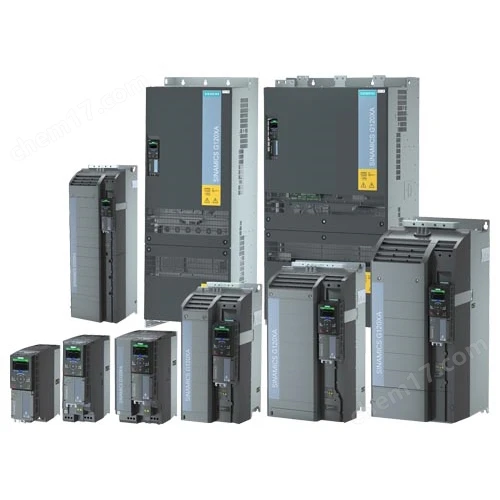
| Siemens | SINAMICS G120 | 0.37–250 kW | Sensorless Vector | Mid |
| Schneider Electric | Altivar 320 | 0.37–18.5 kW | Scalar and Vector Control | Low-Mid |
Advantages & Long-Term Value
Implementing variable frequency drive circuit diagrams effectively yields:
- Energy Savings: Controlling motor speed to match demand cuts electricity waste substantially.
- Increased Lifespan: Reducing motor stress through soft-starts lowers wear and tear, extending equipment life.
- Enhanced Safety & Reliability: Protection circuits prevent costly downtime and hazardous failures.
- Environmental Impact: Reduced emissions align with global sustainability initiatives.
On an emotional level, engineers often say there’s something gratifying about seeing a complex drive working smoothly — it feels like a small victory over inefficiency and unpredictability.
Future Trends & Innovations
If you peek into the near future, expect more integration of smart sensors and IoT connectivity within VFD circuit designs, enabling predictive maintenance and real-time optimization. Green energy adoption means drives will increasingly pair with renewable sources, requiring advanced power electronics. Moreover, novel wide-bandgap semiconductor devices (like SiC and GaN) promise more compact, efficient inverters with lower losses.
Regulatory bodies such as the IEC are working on evolving standards to support these progressive technologies, ensuring safety and interoperability worldwide. So, understanding the foundational variable frequency drive circuit diagram remains essential as the layers of complexity grow.
Challenges & Practical Solutions
Despite the promising outlook, several hurdles exist: complexity of circuits can be daunting; harmonics generated may affect power quality; and initial investment costs sometimes deter adoption. However, modern designs incorporate harmonic filters and modular layouts to tackle these issues.
Training and open-source resources — like detailed circuit diagrams and simulation tools — help engineers get up to speed faster, turning potential obstacles into solvable puzzles.
Frequently Asked Questions About Variable Frequency Drive Circuit Diagram
- Q: How does a variable frequency drive circuit diagram help with energy efficiency?
- A: It visually breaks down how the VFD controls motor speed by adjusting frequency and voltage, ensuring the motor runs only as fast as needed, which significantly cuts energy consumption.
- Q: Can variable frequency drive circuits be customized for specific industrial needs?
- A: Absolutely. Circuit diagrams serve as blueprints that can be tailored to include additional sensors, specific control algorithms, or safety features depending on application requirements.
- Q: What are common protection features shown in VFD circuit diagrams?
- A: Overcurrent, overvoltage, short circuit, and temperature sensing components are typical to prevent damage to the drive and connected motors.
- Q: How can I use variable frequency drive circuit diagrams to troubleshoot motor issues?
- A: By following the diagram, you can locate where signals or power feeds might be failing or out of spec, enabling targeted repairs or adjustments.
Conclusion & Call to Action
In the end, mastering the variable frequency drive circuit diagram is more than an academic exercise — it’s key to unlocking better energy management, prolonged motor life, and safer operations worldwide. Whether you’re an engineer designing new systems or a technician maintaining existing ones, this knowledge pays dividends in efficiency and innovation.
Interested in learning more or sourcing your own variable frequency drive components? Visit our site at https://www.tianjinyongkai.com for detailed guides, products, and expert support.
A small note: In my years working with VFDs, the neatness of your circuit diagrams often hints at the reliability of the entire setup — always worth investing the time!