VFD Settings Explained: Practical Guide for Industrial Equipment
VFD Settings Explained: A Hands-On Guide for Industrial Equipment
If you’ve spent any time around variable frequency drives (VFDs) — especially in the industrial equipment sector — you know they’re both incredibly useful and, frankly, a bit intimidating at first. I remember my early days troubleshooting VFD setups; it was like speaking a foreign language. But once you get the hang of the settings, they open up so many possibilities for efficiency and control.
In real terms, a variable frequency drive controls the speed of an electric motor by adjusting the frequency and voltage of its power supply. This ability lets industries optimize processes — from conveyor belts to pumps and HVAC systems. But the magic lies in the configuration, and that’s where we often see engineers spending the bulk of their time.
So what exactly are the key VFD settings you should know? Let me walk through them based on years on the floor and chatting with operators and manufacturers alike.
1. Frequency Settings
At the core, the frequency setting determines the motor speed. Most industrial motors are designed to run at 50 or 60 Hz, but via the VFD you can dial that down or up without mechanical changes. I’ve seen scenarios where subtle tweaks here save huge energy costs on pumps and fans, especially during off-peak hours.
2. Acceleration and Deceleration Time
You want your motor to speed up and slow down smoothly to avoid mechanical stress. Accel/decel times let you control how fast the frequency changes. Too abrupt and you risk belt slippage, excessive wear, or even system trips. I usually recommend starting slow during initial setup and then tuning for optimal response.
3. Torque Limits and Overcurrent Protection
This is crucial — the VFD must protect the motor from drawing too much current which can cause overheating and failure. Setting correct torque limits and enabling protection features has prevented countless breakdowns in my experience.
4. Motor Control Modes
Different applications require different control strategies: volts-per-hertz, sensorless vector control, or closed-loop vector control. Picking the right mode depends on precision needs, motor type, and budget. Oddly enough, sensorless vector control is often an economical way to get fine speed regulation without extra sensors.
5. PID Control Settings
For processes demanding tight regulation — say temperature or pressure control — the built-in PID controller lets the VFD adjust motor speed based on feedback signals. Configuring these PID parameters right is part art, part science; many times I have had to help operators tune these on site with trial and error.
| Specification | Details |
|---|---|
| Input Voltage | 380–480 VAC, 3-phase |
| Output Frequency Range | 0.1 to 400 Hz |
| Control Modes | V/f, Sensorless Vector, Closed-loop Vector |
| Communication Protocols | Modbus RTU, Profibus, CANopen |
| Protection Features | Overcurrent, Overvoltage, Thermal Overload |
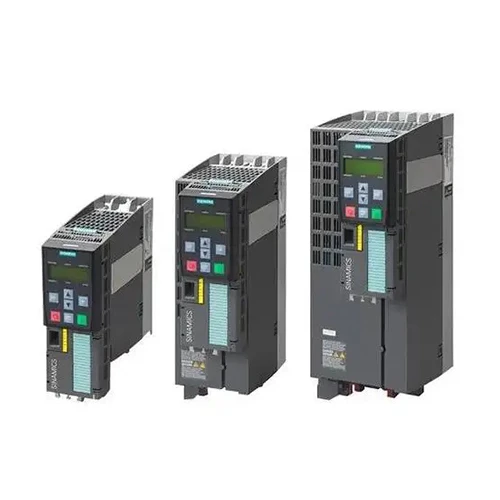
Now, if you’re wondering who manufactures solid VFDs these days, here’s a quick vendor comparison I’ve seen come up during projects for medium to heavy industrial use.
| Vendor | Range (kW) | Key Features | Typical Price Range |
|---|---|---|---|
| Tianjin Yongkai | 0.4 – 630 kW | Robust, customizable, Modbus compatible | $$$ |
| Siemens | 0.37 – 5600 kW | High-end features, extensive support | $$$$ |
| ABB | 0.18 – 6300 kW | Flexible, reliable, advanced safety | $$$$ |
A quick anecdote: I recently helped retrofit a small manufacturing line with VFDs from Tianjin Yongkai. The crew was impressed by how intuitive the settings were — especially with the acceleration and torque parameters — and how quickly we could adjust speeds without shutting down anything for long.
Frankly, working with VFD settings sometimes feels like tuning a musical instrument. The initial setup takes patience, but once everything’s dialed in it runs smoothly, quietly, and efficiently. The needle on energy savings and motor lifespan usually moves in the right direction.
If you’re in the market or maintaining industrial motors, having a solid grasp on these settings is key. It’s the difference between just running equipment and running it smart.
So next time you’re fiddling with a VFD, remember: approach it like a conversation with the motor, and the results will follow.
References:
- IEEE Standards for Variable Frequency Drives, 2023.
- Manufacturer datasheets from Tianjin Yongkai Industrial Tech.
- Practical Industry Applications: "Optimizing VFD Settings for Energy Efficiency" - Tech Journal, 2021.