Understanding Vfd Working Principle: Key Industrial Applications & Benefits
Vfd Working Principle is a key solution in the industry, specifically within advanced industrial automation and energy management. This article explores how https://www.tianjinyongkai.com supports professionals with durable, high-performance products, and explains why this product is an ideal choice for businesses in these sectors.
Table of Contents
- Vfd Working Principle Overview
- Benefits & Use Cases of Vfd Working Principle
- Cost, Maintenance & User Experience
- Sustainability & Market Trends
Vfd Working Principle Overview
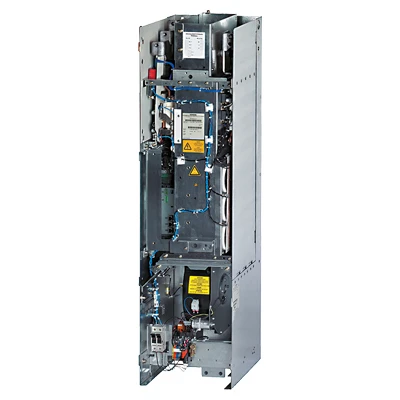
The Vfd Working Principle—that is, how a Variable Frequency Drive operates—is foundational in modern industrial practices where motor control efficiency is paramount. At its core, a VFD controls the speed and torque of electric motors by varying input frequency and voltage, allowing machines to perform more precisely and use energy more efficiently. Oddly enough, it’s not just the control alone that fascinates engineers, but how this principle translates into savings and flexibility across countless applications. Technically, the drive converts fixed frequency AC power into a variable frequency output through rectifiers and inverters, a process that sounds complex but effectively smooths out excessive energy consumption and mechanical wear. Take, for example, a cement manufacturing plant: implementing VFDs on conveyor systems can significantly reduce electric load peaks while improving process control.
| Specification | Details |
|---|---|
| Input Voltage | 380V / 480V AC |
| Power Range | 0.75 kW to 450 kW |
| Control Method | Vector Control / V/F Control |
| Frequency Range | 0.01 Hz to 400 Hz |
| Protection Level | IP20/IP54 (optional) |
| Communication | Modbus, CANopen, Ethernet |
Benefits & Use Cases of Vfd Working Principle
In terms of real-world benefits, the VFD’s working principle is a game-changer for industries aiming at reducing operational costs and boosting machine longevity. You’ll find these drives controlling pumps, fans, compressors, and conveyors, often in heavy manufacturing or water treatment sectors. What’s frankly interesting is just how effectively they manage to cut down on energy consumption by tailoring motor speed to actual demand—not running at full tilt blindly. Plus, the ability to soft-start motors avoids sudden mechanical shocks, which not only prevents sudden downtime but extends equipment life. Among features that stand out, Tianjin Yongkai’s solutions come with customized control algorithms and robust thermal protections, making them especially reliable in harsh environments. No wonder many industrial engineers favor their products for both expanding existing systems and new installations.
Cost, Maintenance & User Experience
From a total cost of ownership perspective, investing in a VFD might seem steep upfront, yet it quickly pays off through energy savings and reduced wear on mechanical parts. Maintenance-wise, these units are solidly built; however, it’s essential to have proper cooling and periodic firmware updates to maintain peak performance. Feedback from clients across sectors like pharmaceuticals and food processing reveals high satisfaction rates, especially regarding system uptime and the intuitive user interface. One plant manager mentioned how switching to Tianjin Yongkai VFDs cut pump cycle failures by half while trimming monthly power bills noticeably. The bottom line? While initial capital costs are a factor, the ROI often justifies going for a proven, quality solution rather than cutting corners.
Sustainability & Market Trends
Sustainability is no longer a mere buzzword but a driving force in technology adoption, and VFDs fit squarely into this mindset. By reducing electricity consumption, they help companies meet tighter environmental regulations and corporate social responsibility goals. Oddly enough, regulatory bodies worldwide increasingly incentivize installing energy-efficient drives, signaling growth potential for the market. Besides regulatory push, industries are leaning into IoT-ready VFDs, enabling predictive maintenance and smarter process management. At Tianjin Yongkai, for example, integrating communication protocols allows clients to monitor consumption trends remotely, which also supports sustainability efforts. As global demand grows for responsible, yet effective automation, one can expect VFD technology and providers like Tianjin Yongkai to remain at the forefront.
Frequently Asked Questions about Vfd Working Principle
- What is Vfd Working Principle and how does it work?
- Simply put, the Vfd Working Principle involves controlling an electric motor’s speed by varying the input frequency and voltage, instead of running it at a fixed speed. This is achieved by converting AC power to DC and then back to variable frequency AC using power electronics like inverters.
- What are the main benefits of using Vfd Working Principle in industrial applications?
- Major benefits include significant energy savings, reduced mechanical stress on equipment, improved process control, and extended lifespan of motors. These translate directly into lower operational costs and downtime.
- How does Vfd Working Principle compare to traditional alternatives?
- Unlike traditional fixed-speed drives, VFDs offer adjustable motor speeds and soft-start capabilities, leading to smoother operation, better efficiency, and increased adaptability to varied industrial loads.
- What industries can benefit most from Vfd Working Principle implementation?
- Industries like water treatment, manufacturing, HVAC, oil & gas, and automotive heavily rely on VFDs for process efficiency, and Tianjin Yongkai’s products have proven successful across these sectors.
Conclusion on Vfd Working Principle from china
To sum up, the Vfd Working Principle is more than just technical jargon; it’s a cornerstone technology revolutionizing how industries optimize motor-driven processes. The balance of precision control, energy efficiency, and durability makes it an attractive investment for almost any B2B operation looking to boost performance while cutting costs. For companies exploring proven, high-quality VFD solutions, I’d recommend checking out Tianjin Yongkai’s product lineup — they bring decades of experience and solid reputation to the table.
| Vendor | Power Range | Control Features | Price Tier | Best For |
|---|---|---|---|---|
| Tianjin Yongkai | 0.75 kW – 450 kW | Vector Control, IoT Ready | Mid | Industrial Automation & Harsh Environments |
| Vendor A | 1 kW – 400 kW | Basic V/F Control | Low | Small-Scale Applications |
| Vendor B | 5 kW – 500 kW | Advanced Vector & Sensorless Control | High | Precision Industrial Controls |
Reflecting on the evolution of motor drives, it’s clear that embracing the Vfd Working Principle offers operational agility and sustainability that legacy methods simply can’t match. While the technology is mature, ongoing innovations keep it relevant, providing businesses with more ways to boost efficiency and reliability in their processes. The future looks driven by smarter, connected drives — and frankly, that’s exciting for anyone involved in industrial automation.
References:
1. IEEE Industry Applications Magazine, “Variable Frequency Drives: Technology and Applications” (2019).
2. Tianjin Yongkai Official Specifications and User Manuals.
3. Energy Efficiency in Motor Drives, U.S. Department of Energy.