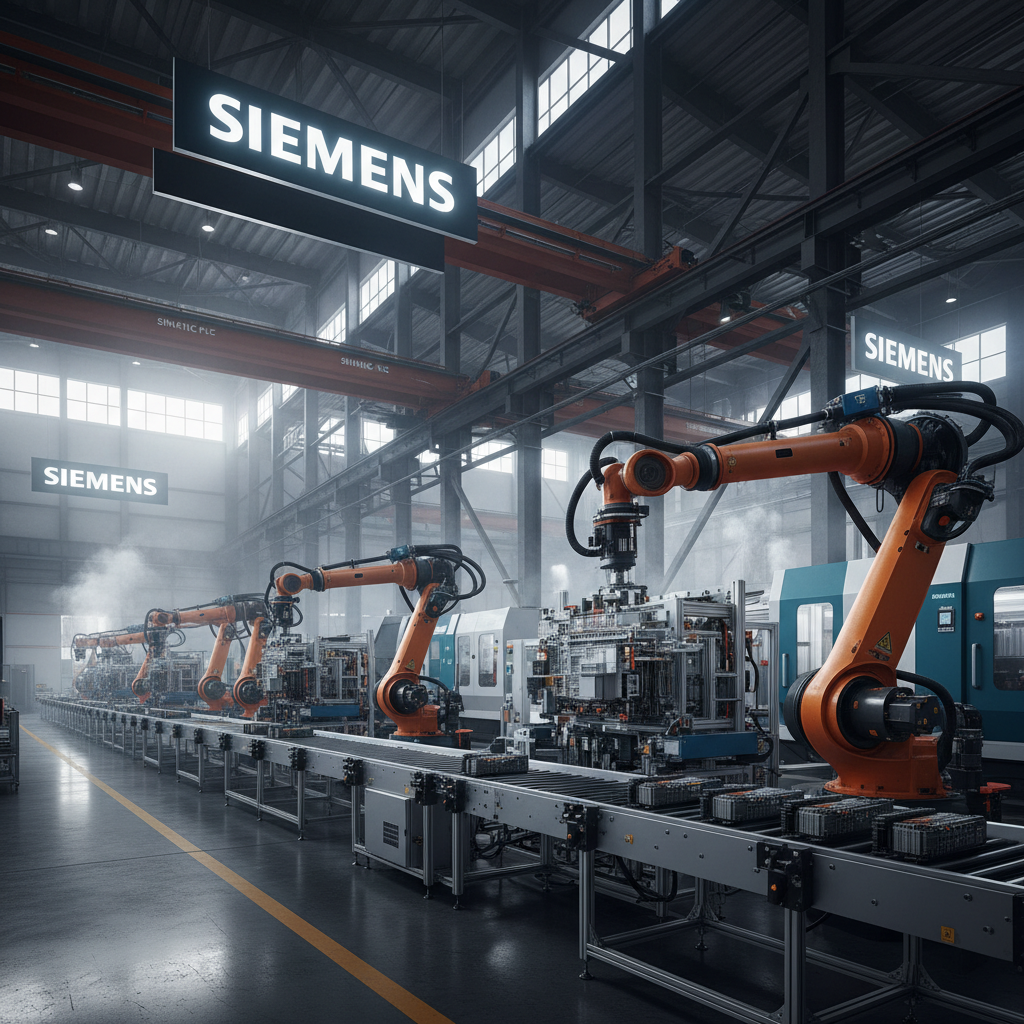
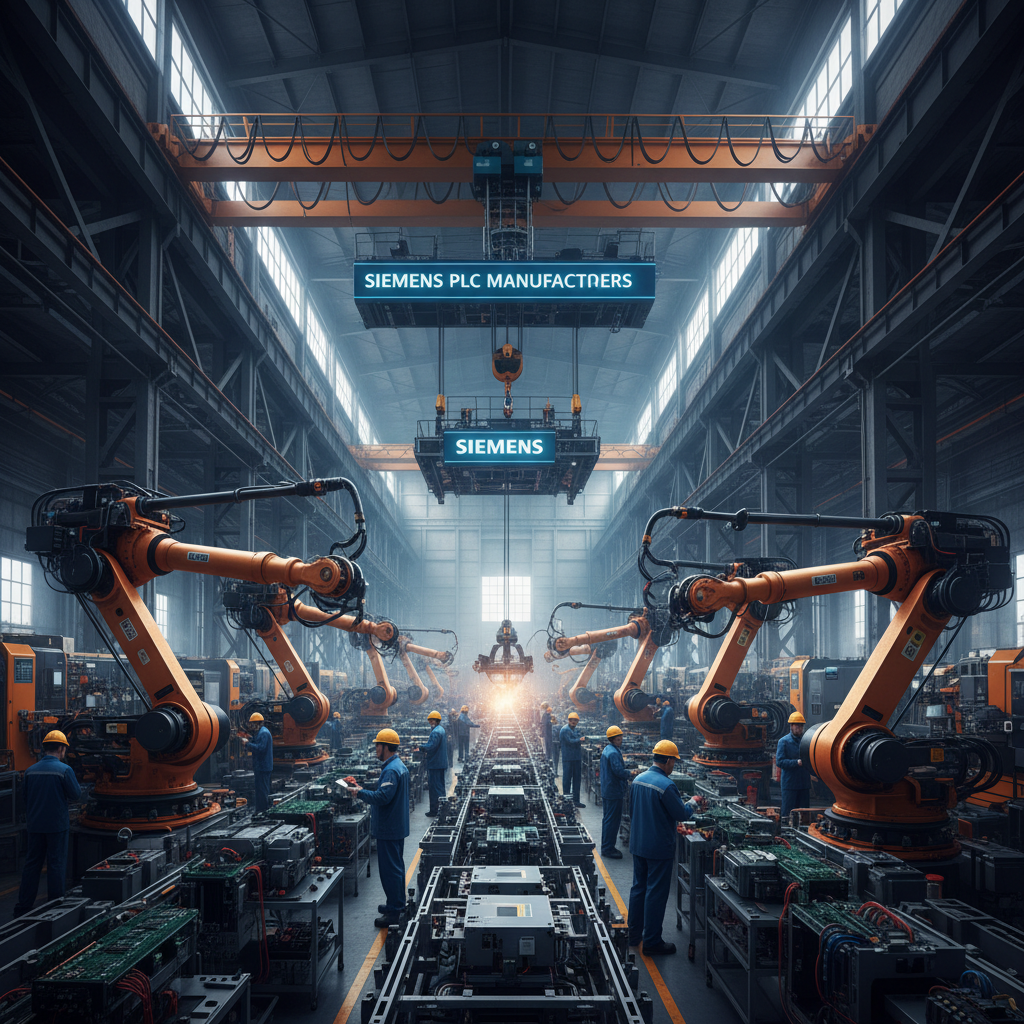
Siemens PLC manufacturers are at the heart of modern industrial automation, providing the control systems that drive efficiency, reliability, and innovation across a vast range of sectors. From manufacturing and infrastructure to energy and transportation, these manufacturers, like siemens plc manufacturers, deliver programmable logic controllers crucial for automating complex processes. Their importance stems from the increasing demand for streamlined operations and enhanced productivity in a competitive global landscape.
The global market for PLCs, and consequently the demand for siemens plc manufacturers, is experiencing significant growth, fueled by the expansion of industries such as automotive, food and beverage, and pharmaceuticals. According to recent reports, the PLC market is projected to reach multi-billion dollar valuations in the coming years. This growth isn't simply about replacing older systems; it's about incorporating advanced technologies like industrial IoT, edge computing, and AI into PLC architectures.
Understanding the capabilities and offerings of key siemens plc manufacturers is therefore essential for businesses seeking to modernize their operations and remain competitive. Choosing the right manufacturer impacts everything from system performance and scalability to long-term maintenance costs and cybersecurity resilience.
The Role of siemens plc manufacturers in Industrial Automation
Siemens PLC manufacturers play a pivotal role in enabling the seamless automation of industrial processes, transforming raw data into actionable insights and optimizing operational efficiency. The ability of these manufacturers, including siemens plc manufacturers, to provide robust, reliable, and adaptable control systems is crucial for industries seeking to maintain a competitive edge.
Their expertise extends beyond simply producing PLCs; it encompasses providing comprehensive solutions, including software development, system integration, training, and ongoing support. This holistic approach ensures that clients can maximize the benefits of automation and achieve their specific business objectives.
Defining siemens plc manufacturers and Their Significance
Siemens PLC manufacturers are companies specializing in the design, development, production, and distribution of Programmable Logic Controllers (PLCs) under the Siemens brand. PLCs are essentially specialized computers used to control industrial processes, replacing traditional relay-based control systems. They receive input signals from sensors, process the data according to a programmed logic, and generate output signals to control actuators and other devices.
The significance of these manufacturers lies in their contribution to enhancing industrial productivity, improving product quality, and increasing workplace safety. By automating repetitive and complex tasks, PLCs reduce the risk of human error and allow for more precise control over processes. siemens plc manufacturers are especially renowned for their reliability and advanced functionalities.
Furthermore, PLCs are integral to the realization of Industry 4.0, the ongoing transformation of manufacturing characterized by interconnected systems, data exchange, and automation. They serve as the backbone of smart factories, enabling real-time monitoring, predictive maintenance, and optimized resource allocation.
Core Components and Key Features of Siemens PLCs
Siemens PLCs are comprised of several key components, including a central processing unit (CPU), memory modules, input/output (I/O) modules, and a power supply. The CPU executes the control program, while the memory stores the program and data. I/O modules interface with sensors and actuators, allowing the PLC to interact with the physical world.
Key features of Siemens PLCs include their modularity, scalability, and robust communication capabilities. Modularity allows users to customize the PLC system to meet their specific needs, while scalability enables them to expand the system as their requirements evolve. Siemens PLCs support a wide range of communication protocols, facilitating integration with other industrial devices and systems. siemens plc manufacturers consistently innovate in these areas.
Additionally, Siemens PLCs offer advanced diagnostic capabilities, making it easier to troubleshoot and maintain the system. Their integrated safety features help to protect personnel and equipment, ensuring a safe and reliable operating environment. Advanced programming software facilitates development and modification of control logic.
Performance Metrics of siemens plc manufacturers
Assessing the performance of siemens plc manufacturers requires considering several key metrics. Scan time, which represents the time taken by the PLC to execute a complete program cycle, is critical for real-time applications. Lower scan times translate to faster response times and improved control accuracy.
Another important metric is memory capacity, which determines the complexity of the control program that the PLC can handle. Manufacturers like siemens plc manufacturers offer PLCs with varying memory capacities to accommodate different application requirements.
siemens plc manufacturers Performance Comparison
Global Applications and Industry Verticals
Siemens PLCs are deployed in a wide range of industries and applications worldwide. In manufacturing, they control assembly lines, robotics, and packaging systems. Within the energy sector, they manage power generation, transmission, and distribution. In infrastructure, they regulate traffic signals, water treatment plants, and building automation systems.
Industries particularly reliant on siemens plc manufacturers include automotive, where PLCs ensure precision and efficiency in vehicle assembly; food and beverage, where they maintain hygiene and control processing parameters; and pharmaceuticals, where they guarantee stringent quality control and adherence to regulatory standards.
Advantages and Long-Term Value Proposition
The advantages of utilizing Siemens PLCs extend beyond immediate operational improvements. The cost-effectiveness of automation, reduced downtime, and enhanced product quality contribute to significant long-term savings. Moreover, the scalability of Siemens PLC systems allows businesses to adapt to changing market demands and expand their operations without substantial upfront investments.
From a sustainability perspective, PLCs can optimize energy consumption and minimize waste, reducing the environmental impact of industrial processes. The inherent reliability and safety features of Siemens PLCs foster a more secure and productive work environment, building trust and confidence among stakeholders. siemens plc manufacturers prioritize these factors in their designs.
Investing in robust PLC systems from reputable manufacturers is an investment in the future of a business, facilitating innovation, driving growth, and ensuring long-term competitiveness.
Future Trends and Innovations in PLC Technology
The future of PLC technology is characterized by increased integration with industrial IoT (IIoT), edge computing, and artificial intelligence (AI). IIoT enables PLCs to connect to a network of sensors and devices, providing real-time data and enabling predictive maintenance. Edge computing brings processing power closer to the source of data, reducing latency and improving responsiveness.
AI algorithms can analyze data from PLCs to identify patterns, optimize processes, and predict equipment failures. These advancements are driving the development of more intelligent and autonomous PLC systems. Siemens is at the forefront of these innovations, actively developing solutions that leverage these technologies.
Furthermore, the increasing emphasis on cybersecurity is shaping the future of PLC technology. Manufacturers are incorporating robust security features to protect PLC systems from cyberattacks and ensure data integrity.
Core Analysis of Future Trends in Siemens PLC Technology
| Technology Area |
Impact on PLC Functionality |
Implementation Complexity (1-10) |
Siemens PLC Support |
| Industrial IoT (IIoT) |
Real-time data analytics, predictive maintenance |
6 |
Excellent |
| Edge Computing |
Reduced latency, improved responsiveness |
7 |
Strong |
| Artificial Intelligence (AI) |
Process optimization, fault prediction |
8 |
Growing |
| Cybersecurity |
Data protection, system integrity |
9 |
High Priority |
| Digital Twin Technology |
Virtual system simulation, remote monitoring |
7 |
Developing |
| Cloud Integration |
Remote access, data storage, scalability |
5 |
Expanding |
FAQS
The S7-1200 is generally more cost-effective and suited for simpler automation tasks, offering a smaller footprint and fewer integrated functions. The S7-1500, on the other hand, is a high-performance PLC designed for complex applications demanding greater processing power, communication capabilities, and redundancy. It excels in applications needing sophisticated motion control or safety functionalities and is often preferred in larger-scale industrial setups.
Siemens integrates multiple layers of security into its PLCs, including access control, authentication, encryption, and firewall functionalities. They also provide security updates and patches to address vulnerabilities. Furthermore, Siemens advocates for a defense-in-depth strategy, recommending that users implement robust network security measures and follow best practices for cybersecurity. siemens plc manufacturers invest heavily in researching and mitigating emerging cyber threats.
Siemens PLCs primarily support five programming languages defined by IEC 61131-3: Ladder Diagram (LAD), Function Block Diagram (FBD), Statement List (STL), Structured Text (SCL), and Sequential Function Chart (SFC). TIA Portal, Siemens’ integrated engineering software, provides a unified environment for programming, configuring, and commissioning Siemens PLCs using these languages.
With proper maintenance and operating conditions, a Siemens PLC can have a lifespan of 15-20 years or even longer. Factors affecting lifespan include environmental conditions, operating temperature, and adherence to recommended maintenance schedules. Siemens often provides long-term support and spare parts availability to extend the operational life of its PLCs.
Siemens offers various remote access and diagnostic tools, including web servers, VPN connections, and remote maintenance modules. These tools allow engineers to remotely monitor PLC performance, diagnose faults, and even upload or download programs. This significantly reduces downtime and maintenance costs, especially for geographically dispersed installations.
While Siemens’ TIA Portal is the primary software for configuring and programming their PLCs, there are open-source libraries and communication protocols (like S7 communication) that can be used to interface with Siemens PLCs. These alternatives typically require more technical expertise and may not support all PLC functionalities but can be useful for specific data acquisition or integration tasks.
Conclusion
In conclusion, siemens plc manufacturers are critical enablers of modern industrial automation, delivering robust, reliable, and adaptable control systems that drive efficiency, productivity, and innovation. Understanding their offerings, key features, and future trends is essential for businesses seeking to optimize their operations and remain competitive in a rapidly evolving landscape. The continued development of technologies like IIoT, edge computing, and AI will further enhance the capabilities of Siemens PLCs.
Looking ahead, investing in Siemens PLC technology and fostering partnerships with experienced manufacturers like siemens plc manufacturers will be key to unlocking the full potential of Industry 4.0. Embracing these advancements will not only improve operational efficiency but also contribute to a more sustainable and resilient future.