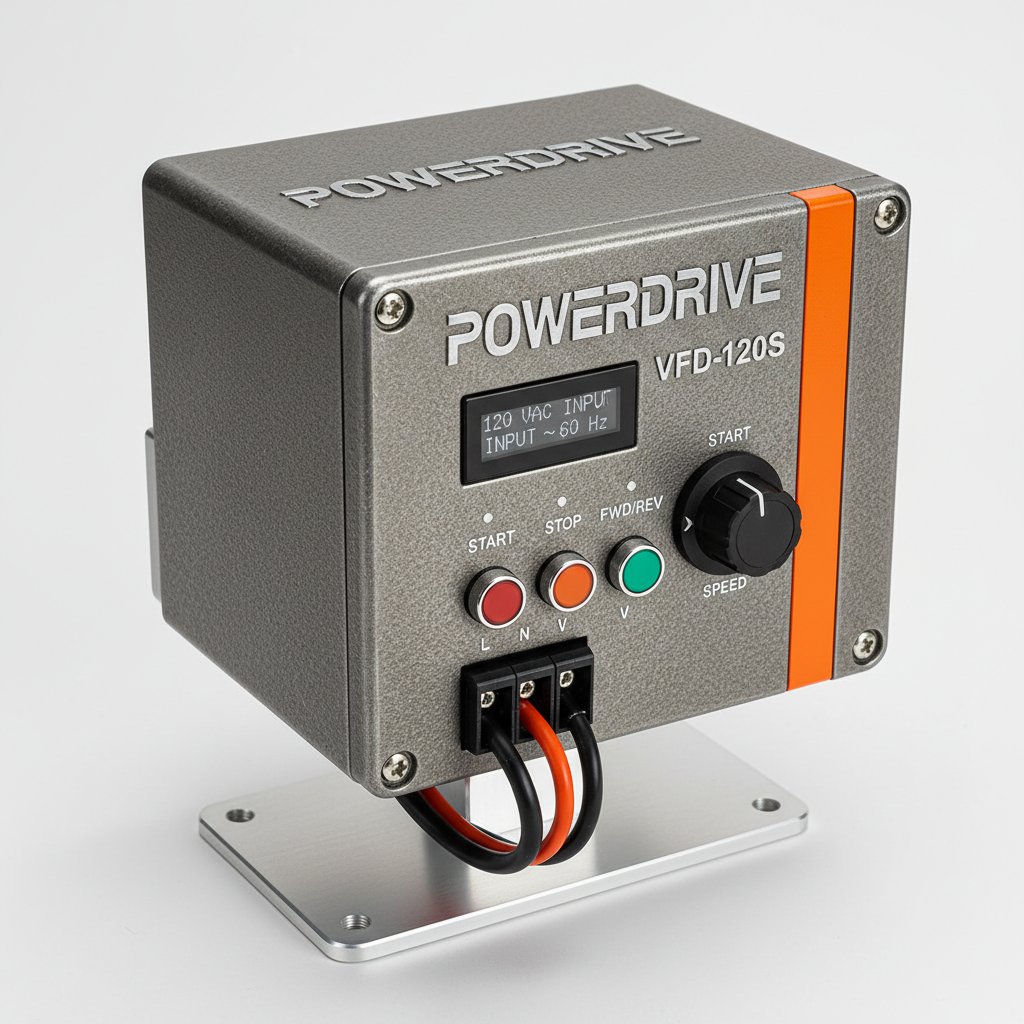
The evolution of industrial automation has seen a significant shift toward modularity and precision, where the integration of advanced control systems and power electronics vfd technologies allows for unprecedented efficiency. In the modern manufacturing landscape, the ability to expand controller capabilities without increasing the physical footprint is a critical competitive advantage, enabling facilities to optimize their space while maintaining high operational standards.
Understanding the synergy between Programmable Logic Controllers (PLCs) and their peripheral expansion modules is essential for any engineer looking to enhance system flexibility. By utilizing specialized signal boards, industries can bridge the gap between complex processing units and the raw data coming from the factory floor, ensuring that every signal is captured and processed with minimal latency and maximum reliability.
For those seeking to optimize their automation architecture, integrating an S7-1200 signal board provides a cost-effective path to scalability. Whether you are managing high-voltage equipment or implementing a power electronics vfd system, the ability to add digital and analog I/O points seamlessly ensures your system evolves alongside your production needs.
Compact Design and Space Optimization
One of the most pressing challenges in modern control cabinet design is the limited available real estate. The S7-1200 signal board addresses this by mounting directly onto the front of the PLC body, effectively adding critical I/O points without requiring any additional DIN rail space. This architectural advantage is particularly vital when integrating the controller with a power electronics vfd setup, where cabinet space is often occupied by bulky capacitors and heat sinks.
By eliminating the need for large expansion modules for minor I/O increases, engineers can reduce the overall size of the electrical enclosure. This not only lowers the cost of the cabinet itself but also simplifies the thermal management of the system, as a more compact layout can be more efficiently cooled.
Flexible Expansion Capabilities
The versatility of the S7-1200 signal board lies in its wide array of available types. Users can choose from digital inputs, digital outputs, mixed digital I/O, analog inputs, and analog outputs depending on the specific needs of their machinery. This flexibility allows the PLC to adapt to changing project requirements without necessitating a complete hardware overhaul.
Beyond simple I/O, the inclusion of communication interfaces such as RS485 allows the signal board to act as a gateway for various field devices. This is especially useful when coordinating multiple drives or sensors, ensuring that the central processing unit remains the heartbeat of the entire automation sequence.
Whether the goal is to monitor a few additional temperature sensors or to trigger several actuators, the modular nature of these boards ensures that the system is neither under-equipped nor over-engineered. This "right-sized" approach to hardware expansion is key to maintaining high efficiency in automated production lines.
Plug-and-Play Integration Logic
The installation process for these signal boards is designed for maximum speed and minimum error. Because they plug directly into the PLC body, there is no need for additional wiring between the main CPU and the expansion board, which significantly reduces the risk of wiring mistakes during the assembly phase.
When implementing a system that involves a power electronics vfd, reducing installation time is critical for maintaining project timelines. The plug-and-play nature of the S7-1200 signal board allows technicians to expand system capacity in minutes rather than hours, accelerating the transition from hardware installation to software commissioning.
This streamlined approach extends to the operational phase, where the simplicity of the hardware connection ensures that maintenance teams can replace or upgrade modules with minimal downtime. In a high-stakes industrial environment, every second of saved installation time translates directly into increased profitability.
Cost Performance and Economic Value
From a budgetary perspective, the signal board offers a high-performance alternative to full-sized expansion modules. For applications that only require a small number of additional I/O points, purchasing a full module would result in wasted capital and unused ports. The signal board provides exactly what is needed at a fraction of the cost.
This economic efficiency makes the S7-1200 an ideal choice for small-scale automation equipment and prototype development. By minimizing the initial hardware investment, companies can allocate more resources toward software optimization and system integration, ensuring a more robust final product.
Economic Efficiency of Power Electronics VFD Control Options
Seamless TIA Portal Synchronization
The true power of the S7-1200 signal board is unlocked through the TIA Portal software. Integration is seamless, allowing users to configure, program, and debug the module within a single unified environment. This eliminates the need for separate configuration tools, reducing the cognitive load on the engineer.
Through the TIA Portal, parametric settings and online monitoring become straightforward. Whether adjusting the gain of an analog input or monitoring a digital output state, the real-time feedback loop allows for rapid iteration and precise tuning of the automation logic.
Signal Diversity and Response Times
Industrial environments demand versatility in signal handling. The digital signal boards support standard 24V DC input/output, while analog versions handle critical signals like 0-10V and 0-20mA. This wide range of support ensures that the PLC can communicate effectively with everything from simple push-buttons to complex pressure transducers.
Speed is equally important in high-precision control. These modules are engineered for fast signal processing, enabling real-time data collection and output. This is essential for safety-critical tasks and high-speed synchronization, where a delay of a few milliseconds could result in production errors.
By maintaining a direct physical and logical connection to the CPU, the signal board minimizes the propagation delay typically found in remote I/O networks. This makes it a superior choice for closed-loop control systems that require immediate responses to sensor changes.
Industrial Reliability and Application Scope
Designed for the rigors of the factory floor, the S7-1200 signal board features an industrial-grade design focused on anti-interference and stability. It is built to operate reliably in harsh environments characterized by electromagnetic noise—a common occurrence in facilities employing a power electronics vfd.
The application scope is vast, ranging from small automation machinery and sensor acquisition to sophisticated process monitoring and actuator control. Its ability to simplify system design by reducing wiring complexity makes it a practical solution for any engineer aiming to increase system uptime.
Ultimately, the combination of reliability and versatility ensures that the signal board is not just an accessory, but a fundamental component in creating a stable, scalable industrial control system.
Comparison of S7-1200 Signal Board Performance Metrics
| Signal Type |
Response Latency |
Interference Resistance |
Integration Ease |
| Digital Input |
Very Low |
High |
Seamless |
| Digital Output |
Low |
Medium-High |
Seamless |
| Analog Input (0-10V) |
Medium |
Medium |
Parametric |
| Analog Input (4-20mA) |
Medium |
Very High |
Parametric |
| Analog Output |
Medium |
Medium |
Parametric |
| RS485 Comm |
Low-Medium |
High |
Configuration-Based |
FAQS
No, the signal board is designed to be mounted directly on the front of the S7-1200 CPU. This means it expands the I/O capabilities without increasing the installation space required in the control cabinet, making it ideal for compact environments.
Typically, each S7-1200 CPU supports one signal board mounted on the front. For further expansion beyond the capacity of a single signal board, users should look toward adding S7-1200 signal modules (SM) on the DIN rail.
It provides a space-saving way to add the specific analog or digital inputs/outputs needed to control and monitor a VFD. By using a signal board, you can receive speed feedback or send frequency setpoints without needing a bulky expansion module.
Yes, TIA Portal is the essential software for configuring, programming, and debugging the signal board. It allows for seamless parametric settings and real-time online monitoring of all I/O points.
The analog signal boards typically support common industrial standards, including voltage signals (such as 0-10V) and current signals (such as 0-20mA or 4-20mA), ensuring compatibility with most industrial sensors.
Yes, they are built with industrial-grade components specifically designed for high stability and anti-interference, allowing them to operate reliably alongside high-power equipment and electrical noise.
Conclusion
The S7-1200 signal board represents a perfect balance of compactness, flexibility, and cost-efficiency for modern industrial automation. By allowing for the seamless expansion of digital and analog I/O points without sacrificing cabinet space, it solves one of the most common headaches in control system design. When paired with the power of TIA Portal and the reliability of Siemens engineering, it ensures that your automation system can scale effortlessly while maintaining peak performance and stability.
As the industry moves toward more intelligent and integrated systems, the ability to quickly adapt hardware to new requirements will be the deciding factor in operational agility. Whether you are managing a simple actuator or a complex power electronics vfd network, adopting modular expansion strategies is a forward-thinking move. We invite you to explore more high-performance automation components by visiting our website: www.oukeconstruction.com.