Siemens S7 1200 Analog Input Scaling for Accurate Industrial Control
Understanding Siemens S7-1200 Analog Input Scaling
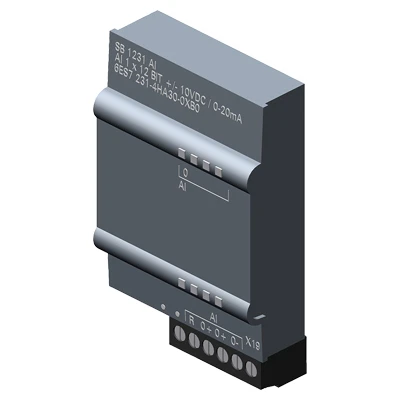
The Siemens S7-1200 PLC is a powerful and versatile controller widely used in industrial automation. A crucial aspect of utilizing its analog input capabilities is understanding analog input scaling. This process maps the physical signal from sensors (like temperature, pressure, or flow) into a usable numerical value within the PLC. Correct scaling ensures accurate data representation and reliable control system performance. This article will cover the essentials of S7-1200 analog input scaling, providing practical guidance for engineers and technicians. Properly configured scaling is essential for efficient and accurate automation processes.
Why is Analog Input Scaling Important?
Without proper scaling, the PLC receives raw analog values that don't correspond to the actual physical measurement. For example, a 4-20mA signal representing 0-100°C would be read as a range of values that need to be translated. Scaling provides this translation, allowing the PLC to interpret the signal correctly and trigger appropriate actions. This is critical for process control, data logging, and alarm systems. Miscalibrated analog inputs can lead to inaccurate readings, incorrect control decisions, and potentially even safety hazards. The Tianjin Yongkai offers expertise in optimizing PLC systems for accurate analog input scaling.
Key Benefits: Accurate data representation, reliable control, reduced risk of errors, improved process optimization, and enhanced system safety.
Siemens S7-1200 Analog Input Scaling Parameters
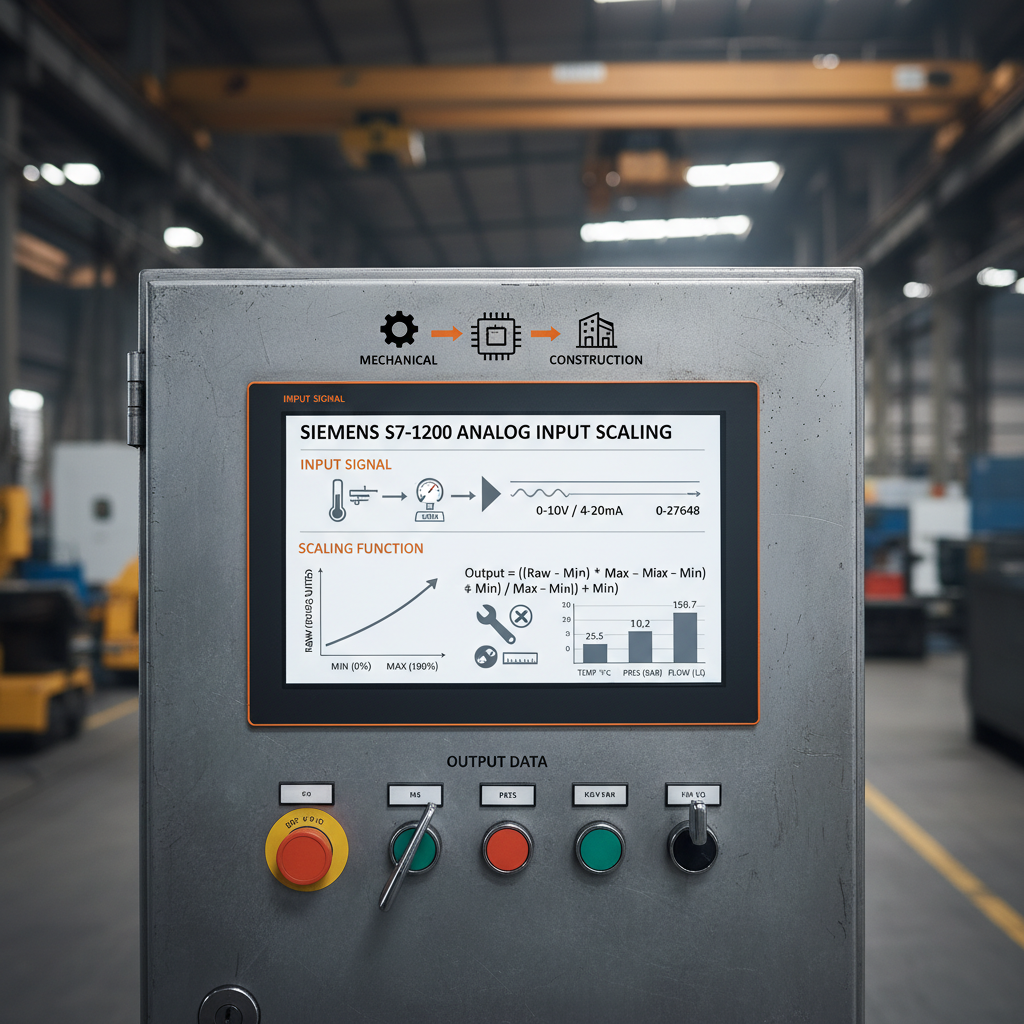
The S7-1200 uses specific parameters within the TIA Portal software to define the scaling. These include: Input Range (Imin/Imax): This defines the minimum and maximum values of the analog input signal (e.g., 0-10V, 4-20mA). Output Range (Omin/Omax): This defines the corresponding minimum and maximum values that the PLC will use (e.g., 0-100, -50 to 50). The PLC linearly maps the input range to the output range. Understanding these parameters and how they interact is key to achieving accurate scaling. Careful selection and configuration of these parameters in the TIA Portal are critical to the success of your automation project.
Scaling Parameters Explained:
• Imin: Minimum input value (e.g., 4mA).
• Imax: Maximum input value (e.g., 20mA).
• Omin: Minimum output value (e.g., 0).
• Omax: Maximum output value (e.g., 100).
Siemens S7-1200 Analog Input Scaling Examples
Let’s look at a few common examples. Example 1: 4-20mA to 0-100%. Imin = 4, Imax = 20, Omin = 0, Omax = 100. A signal of 4mA will be scaled to 0%, and a signal of 20mA will be scaled to 100%. Any value between will be linearly scaled. Example 2: 0-10V to -20 to +20°C. Imin = 0, Imax = 10, Omin = -20, Omax = 20. This scales a voltage signal to a temperature range. These examples demonstrate the flexibility of the S7-1200 scaling capabilities. Contact Tianjin Yongkai for assistance with complex scaling scenarios.
Troubleshooting Scaling Issues
Common issues include incorrect parameter values, wiring errors, or sensor malfunctions. If the scaled value is inaccurate, double-check the Imin, Imax, Omin, and Omax settings in the TIA Portal. Verify the sensor is properly wired and functioning correctly. Use a multimeter to confirm the analog signal is within the expected range. Our team at Tianjin Yongkai can help diagnose and resolve any scaling challenges you encounter.
Conclusion: Mastering Analog Input Scaling for Optimal PLC Performance
Effective Siemens S7-1200 analog input scaling is fundamental to building reliable and accurate automation systems. By understanding the parameters, applying appropriate scaling techniques, and troubleshooting effectively, you can maximize the performance of your PLC and achieve optimal process control. Don't hesitate to leverage the expertise of professionals like those at Tianjin Yongkai to ensure your scaling is implemented correctly.
Frequently Asked Questions (FAQs)
What is the typical resolution of analog inputs on the S7-1200?
The S7-1200 analog inputs typically have a resolution of 12 bits. This means they can represent 4096 distinct values. While sufficient for many applications, it's important to be aware of this limitation when dealing with signals requiring high precision. The accuracy of the scaling also influences the overall precision of the measurement. Proper filtering and averaging techniques can help mitigate the effects of quantization error inherent in 12-bit resolution.
Can I use negative values for my output range (Omin)?
Yes, absolutely. The S7-1200 allows you to define both positive and negative values for the output range. This is essential for applications where the physical measurement can be both above and below a reference point (e.g., temperature measurements with 0°C as the reference). Ensure you correctly configure Omin and Omax to accurately represent the full range of the measurement.
What happens if the input signal goes outside of the defined Imin/Imax range?
If the input signal exceeds Imin or Imax, the scaled value will be limited to Omin or Omax, respectively. This behavior prevents the PLC from interpreting invalid values. However, it’s crucial to identify and address the root cause of the out-of-range signal, as it may indicate a sensor failure or process issue. Implementing appropriate alarms and diagnostics can help detect and respond to these events.