S7 300 Programmable Controller: Meeting the Core Requirements of Industrial Automation Systems
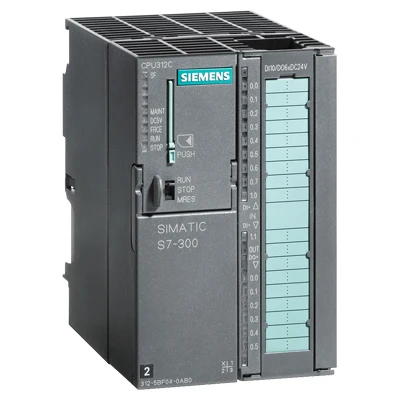
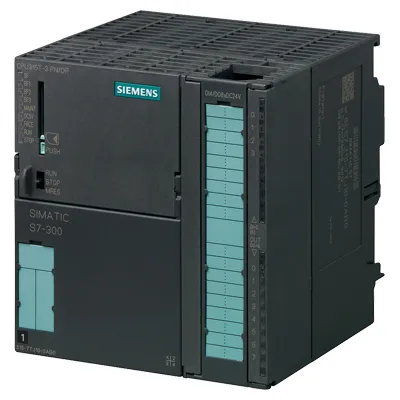
With the continuous development of industrial automation, higher requirements have been put forward for the performance, reliability, and flexibility of automation control systems. Among numerous control schemes, the Siemens S7 300 Programmable Controller has become one of the core equipment in the field of industrial automation due to its advanced technology, wide application range, and excellent stability. The S7 300 Programmable Controller series controllers are designed to meet the automation needs of various complex industrial environments, thereby achieving efficient, safe, and intelligent production processes.
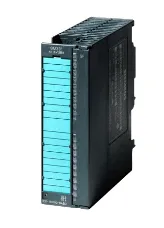
The biggest advantage of the S7 300 Programmable Controller lies in its modular structure design
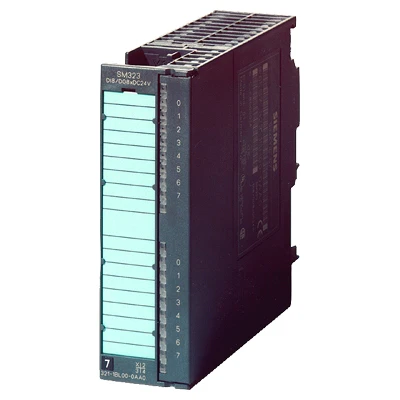
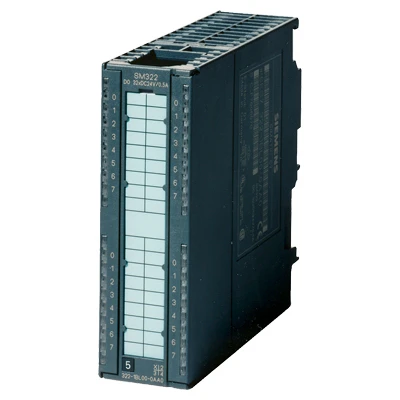
Users can choose different input/output modules, communication modules, and special function modules according to different industrial application needs to achieve customized system configuration. This modularization not only greatly increases the scalability of the system, but also facilitates future maintenance and upgrades. Whether it's simple mechanical control or complex production line management, the simatic s7 300 can provide flexible solutions that meet the diverse needs of different industries and scales of enterprises through reasonable module combinations. In addition, its compact design ensures the space utilization of the equipment, providing greater convenience for the layout of industrial sites.
Ensuring the reliability of S7 300 Programmable Controller is one of the key factors in industrial automation
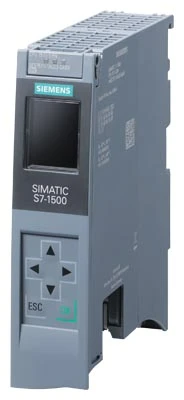
The 6es7317 2ek14 0ab0 controller adopts high-quality hardware design, with strong anti-interference ability and high stability, and can operate stably even in harsh industrial environments. Combined with comprehensive software protection mechanisms and fault diagnosis functions, potential problems can be identified in advance, reducing downtime and ensuring production continuity. Siemens also provided rich programming and debugging tools for the S7 300 Programmable Controller, greatly simplifying the debugging process and improving the overall reliability of the system. In practical applications, the high anti-interference design and rigorous fault tolerance mechanism of S7 300 Programmable Controller make it an important guarantee for ensuring the stable operation of industrial automation systems.
In terms of functionality, the S7 300 Programmable Controller controller has strong communication capabilities and supports multiple industrial protocols and interfaces, such as Profibus, Profinet, etc
This enables 6gk7343 1cx10 0xe0 to be easily integrated into complex industrial networks for data collection, transmission, and remote monitoring. By seamlessly connecting with other automation devices, human-machine interfaces (HMI), and upper computer systems, a complete automation control architecture is formed. In addition, Siemens also provides a wealth of software tools, such as STEP 7 programming software and TIA Portal integrated environment, which simplifies the system development and maintenance process. Powerful communication and software support ensure the high integration and intelligence of the control system, meeting the development needs of Industry 4.0 in the future.
In summary, the Siemens 6es7313 5bg04 0ab0 programmable controller has become an indispensable core of industrial automation systems due to its flexible modular design, excellent reliability, and powerful communication capabilities. It can not only meet various control needs from simple to complex, from small to large, but also adapt to the constantly changing industrial environment, providing efficient, reliable, and intelligent automation solutions for enterprises. In the future, with the continuous upgrading of industrial technology, the S7 300 Programmable Controller, with its stability and scalability, will continue to play an important role in the field of industrial automation, promoting industrial production towards a more efficient and intelligent direction.
S7 300 Programmable Controller FAQs
What are the main features of S7 300 Programmable Controller PLC?
Modular design: supports flexible combination of CPU, power supply, I/O module, and communication module to adapt to control tasks of different scales.
Powerful processing capability: Supports Boolean operations, floating-point operations, timing/counting, and other functions, suitable for logic control, motion control, and process control.
Industrial grade reliability: Wide operating temperature range (25 ° C~+60 ° C), strong electromagnetic interference resistance, suitable for harsh environments.
Communication integration: Supports PROFIBUS, MPI, Ethernet (some models) for easy networking with HMI, drivers, and other devices.
How to expand the I/O points of S7 300 Programmable Controller?
Through signal module (SM): Add digital (DI/DO) or analog (AI/AO) modules, with a maximum of 8 modules supported per rack.
Distributed Expansion: Using ET 200M remote I/O stations (connected via PROFIBUSDP or PROFINET), the expansion distance can reach several hundred meters.
Attention: The expansion module needs to be configured in the STEP 7 hardware configuration and ensure that the power capacity is sufficient.
How to achieve data communication between S7 300 Programmable Controller and upper computer?
OPC communication: Connect SCADA systems such as WinCC through SIMATIC NET OPC Server.
PROFIBUS/Ethernet: Use CP3425 (PROFIBUS) or CP3431 (Ethernet) modules to communicate with PCs or third-party devices.
Protocol support: Supports S7 protocol, MODBUS TCP (library function required), TCP/IP native communication, etc.
What is the programming software for S7 300 Programmable Controller? How to backup the program?
Programming software: Use STEP 7 V5. x (classic environment) or TIA Portal (new version compatible with S7 300 Programmable Controller).
Backup method:
- Online backup: Connect PLC through PG/PC and upload hardware configuration and program blocks in STEP 7.
- Memory card backup: Download the program to an MMC card (S7 300 Programmable Controller only supports MMC and cannot use a regular SD card).
- Archive project: Save the entire STEP 7 project file to an external storage device.
How to implement fault diagnosis for S7 300 Programmable Controller?
Hardware diagnosis: Quickly determine the type of fault (such as power failure, module failure) through the CPU's LED status lights (SF, RUN, STOP).
Software diagnosis:
Use the 'Module Information' function in STEP 7 to view detailed error codes.
Call the OB organization block (such as OB86 for communication failures and OB35 for timed interrupt monitoring).
Distributed diagnosis: Diagnose the status of slave devices through PROFIBUS or PROFINET.