Comprehensive Guide to Analog Programming in Siemens PLC for Automation Engineers
Analog Programming in Siemens PLC: A Comprehensive Guide
Analog programming in Siemens Programmable Logic Controllers (PLCs) is a fundamental skill for automation engineers. Unlike digital signals which are discrete (on or off), analog signals are continuous and represent values like temperature, pressure, or flow. Mastering analog programming allows for precise control and monitoring of industrial processes. This article will explore the core concepts, techniques, and benefits of utilizing analog programming within Siemens PLCs, providing a detailed overview for both beginners and experienced professionals. Learn how to efficiently implement and troubleshoot analog systems for optimal performance. For robust Siemens PLC solutions, visit Tianjin Yongkai Automation Technology Co., Ltd.
Understanding Analog Signals and Siemens PLCs
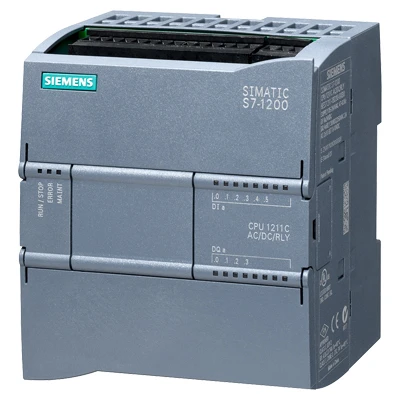
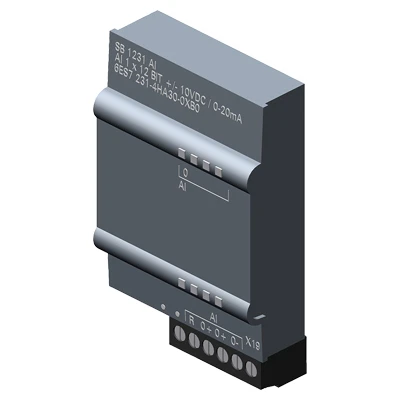
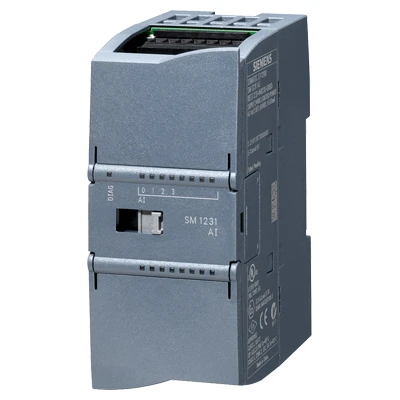
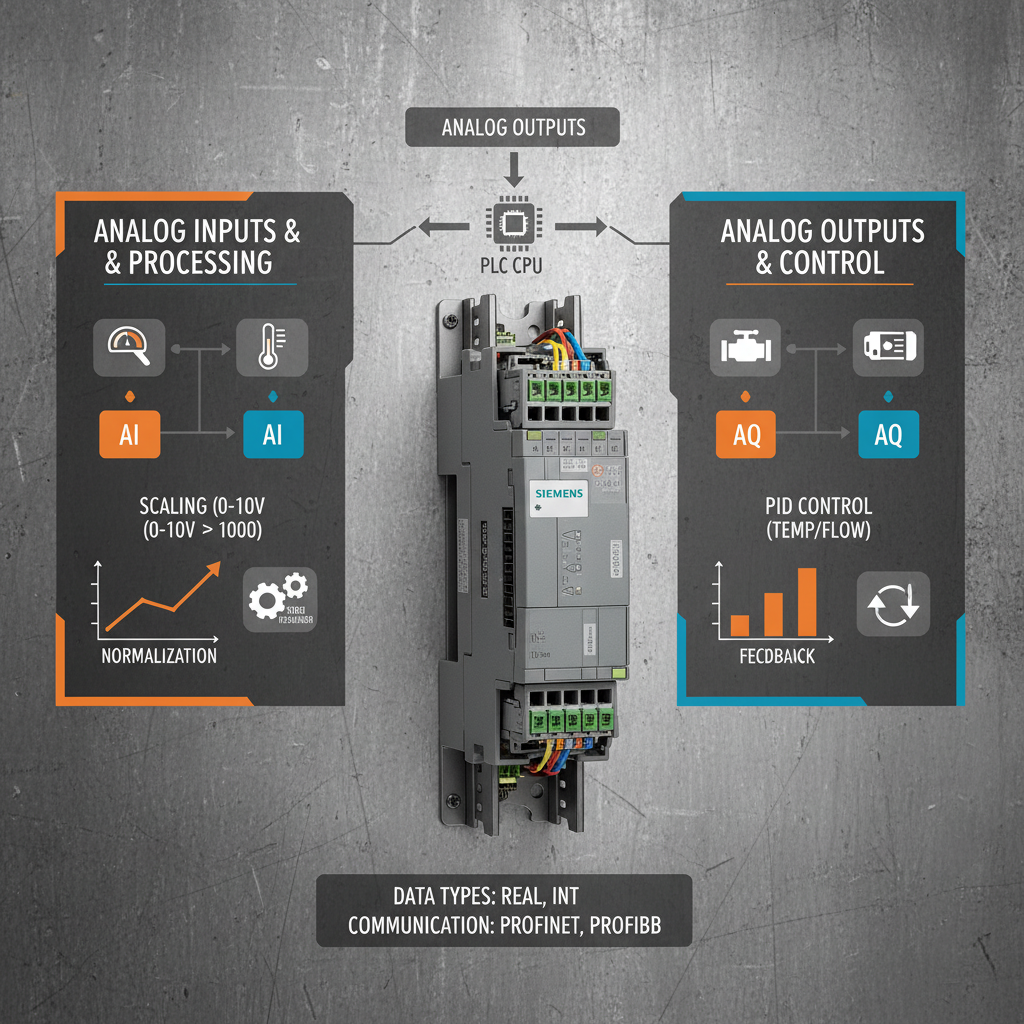
Analog signals are typically represented as voltages (0-10V) or currents (4-20mA) within industrial applications. Siemens PLCs, such as those in the S7-1200 and S7-1500 series, offer dedicated hardware modules to interface with these analog signals. These modules contain Analog-to-Digital Converters (ADCs) to convert the analog input into a digital value that the PLC can process, and Digital-to-Analog Converters (DACs) to convert digital values back into analog outputs to control actuators. Properly scaling these inputs and outputs is crucial for accurate control and representation of process values. Tianjin Yongkai provides a range of Siemens PLC hardware and support.
Key Takeaway: Siemens PLCs are equipped with dedicated modules to handle analog signals, converting them into digital data for processing and back again for control.
Analog Programming Techniques in Siemens TIA Portal
Siemens TIA Portal, the engineering software for Siemens PLCs, provides several programming methods for handling analog signals. These include using the 'Scale' instruction to map the raw ADC/DAC values to engineering units (e.g., converting a 4-20mA signal to 0-100% flow rate). PID controllers are extensively used for precise analog control, allowing for setpoint tracking and disturbance rejection. Furthermore, analog signal filtering can be implemented to reduce noise and improve stability. Using the appropriate data types (REAL or INT) is critical for accurate calculations and representation of analog values.
Essential Programming Tools:
• Scale Instruction: Converts raw values to engineering units.
• PID Controller: For precise analog loop control.
• Data Types: REAL for floating-point precision, INT for integer representation.
Analog Input vs. Analog Output Programming in Siemens PLCs
While both analog input and output programming involve scaling and conversion, the approaches differ. Analog input programming focuses on reading and interpreting the analog signal from sensors, requiring careful consideration of noise filtering and range calibration. Analog output programming concentrates on generating a precise analog signal to control actuators, needing accurate scaling and potentially linearization to account for actuator non-linearities. Proper configuration of the hardware modules is paramount for both.
Troubleshooting Analog Programming Issues
Common issues in analog programming include inaccurate readings, unstable outputs, and unexpected behavior. Troubleshooting steps involve verifying the hardware connections, checking the scaling parameters, and analyzing the signal quality using diagnostic tools within TIA Portal. Look for excessive noise, ground loops, and incorrect wiring. Utilizing online monitoring and trending can help identify intermittent problems. Tianjin Yongkai offers expert troubleshooting assistance and support.
The Future of Analog Programming in Industrial Automation
As industrial automation evolves, analog programming will remain a critical skill. Integration with Industrial Internet of Things (IIoT) platforms and advanced analytics will require sophisticated signal processing and data interpretation. Expect to see increased use of smart sensors and predictive maintenance algorithms leveraging analog data for optimized performance. Investing in training and development related to analog programming ensures a skilled workforce ready for the challenges of future automation systems. Tianjin Yongkai stays at the forefront of these advancements and provides cutting-edge solutions.
Conclusion: Mastering Analog Programming for Industrial Success
Effective analog programming is essential for precise control and monitoring in industrial automation. Understanding the principles of analog signals, utilizing the tools within Siemens TIA Portal, and implementing robust troubleshooting techniques are key to achieving optimal system performance. By investing in the right knowledge and solutions, you can unlock the full potential of your automation systems. Tianjin Yongkai Automation Technology Co., Ltd. is your trusted partner in Siemens PLC programming and industrial automation.
Frequently Asked Questions (FAQs)
What is the difference between 4-20mA and 0-10V analog signals?
Both 4-20mA and 0-10V are common analog signal standards, but they have different characteristics. 4-20mA is a current loop signal, offering better noise immunity and the ability to transmit over longer distances. The '4mA' baseline allows for fault detection – a current below 4mA indicates a broken wire or sensor issue. 0-10V is a voltage signal, simpler to implement but more susceptible to noise and voltage drops over distance. The choice depends on the application and the environment. For critical applications requiring high reliability, 4-20mA is often preferred. Tianjin Yongkai can help you select the appropriate signal type for your needs.
How can I filter noise from an analog input signal?
Siemens TIA Portal provides several filtering options for analog inputs. Moving average filtering is a simple and effective technique, smoothing the signal by averaging multiple samples. First-order and second-order filters can be used for more precise noise reduction, but require careful tuning to avoid introducing phase lag. Shielded cables, proper grounding, and minimizing cable length are also essential for reducing noise. Hardware filtering may also be implemented at the signal source or input module.
What are the benefits of using PID control with analog signals?
PID (Proportional-Integral-Derivative) control is a powerful technique for maintaining a desired process variable at a setpoint. When used with analog signals, it provides precise and responsive control of actuators like valves and motors. PID control automatically adjusts the output based on the error between the setpoint and the process variable, compensating for disturbances and ensuring stable operation. Tuning the PID parameters (Kp, Ki, Kd) is crucial for optimal performance, and Siemens TIA Portal provides tools to assist with this process.
How do I scale an analog input signal in TIA Portal?
In TIA Portal, you use the 'Scale' instruction to map the raw analog input value (e.g., 0-27648 for a 12-bit ADC) to the engineering units (e.g., 0-100°C). You need to define the input range (Min/Max input) and the output range (Min/Max output). The Scale instruction performs a linear interpolation to convert the raw value to the desired engineering units. Accurate scaling is essential for meaningful data interpretation and control. Consult the Siemens documentation for detailed instructions and examples.