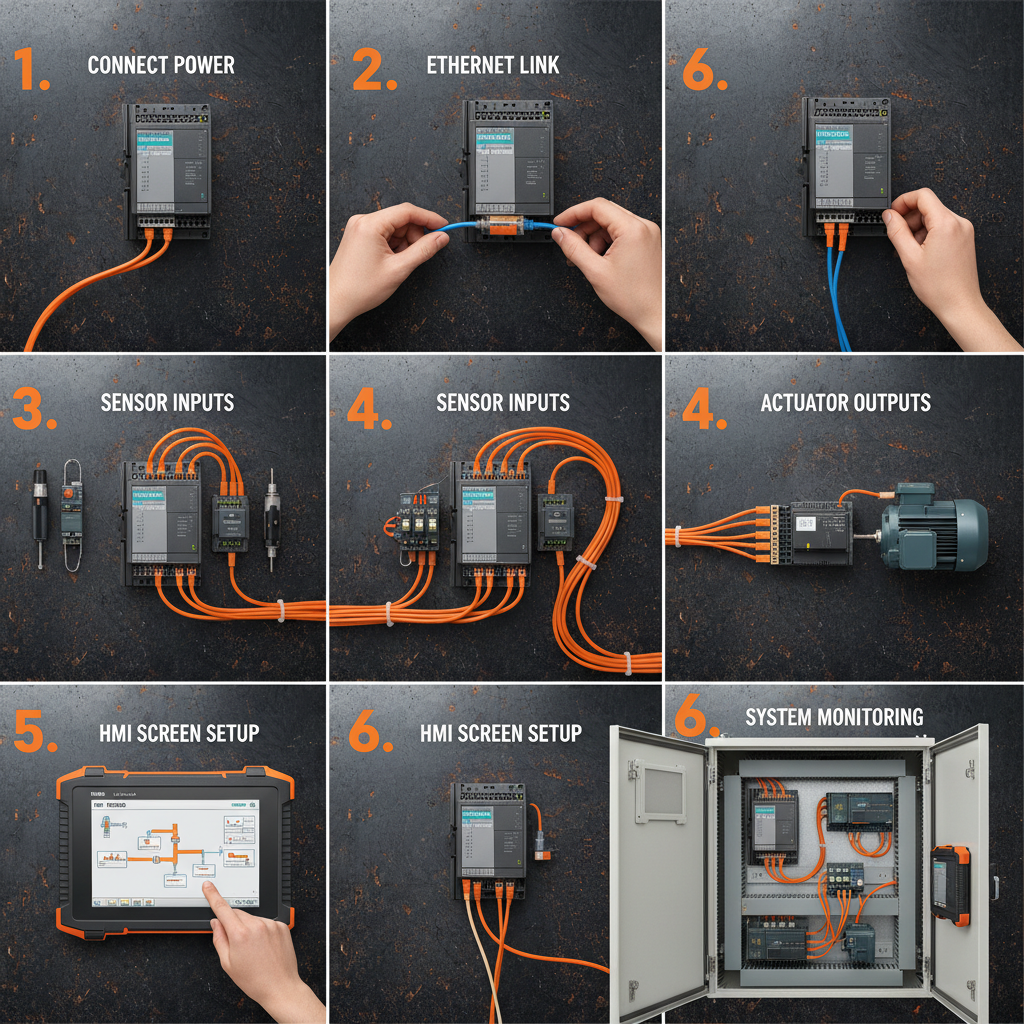
Comprehensive Guide to Siemens Function Blocks for Enhanced PLC Programming
Understanding Siemens Function Blocks: A Comprehensive Guide
Siemens Function Blocks (FBs) are a fundamental building block in programming Siemens PLCs, particularly within the TIA Portal environment. They encapsulate reusable code segments, promoting modularity, organization, and efficient PLC programming. This article will provide a detailed overview of Siemens FBs, their benefits, creation, usage, and best practices. We’ll explore how leveraging FBs can streamline your automation projects and enhance maintainability. For a wide range of Siemens automation solutions, explore Tianjin Yongkai Automation Technology Co., Ltd..
What are Siemens Function Blocks?
Siemens Function Blocks are pre-defined or user-defined code modules that perform specific tasks. Unlike Function (FCs), FBs have internal memory, allowing them to retain data between scan cycles. This makes them ideal for tasks requiring state management, such as controlling processes, managing sequences, or handling complex algorithms. Each FB instance maintains its own data, ensuring that multiple instances of the same FB can operate independently without interfering with each other. Understanding this distinction is key to effective PLC programming with Siemens.
Key Highlights: FBs are reusable, modular code blocks with internal memory, ideal for stateful processes. They promote code organization and maintainability.
Benefits of Using Siemens Function Blocks
Utilizing Siemens FBs offers numerous advantages. They promote code reuse, reducing development time and minimizing errors. The modular nature of FBs simplifies troubleshooting and maintenance, as issues can be isolated to specific blocks. FBs enhance code readability and organization, making it easier for multiple programmers to collaborate on a project. Furthermore, they enable the creation of complex control systems through the interconnection of smaller, manageable blocks. This structure reduces overall program complexity and improves system reliability. Discover how Tianjin Yongkai can help implement these benefits in your projects via our services.
Function Block Benefits:
• Code Reusability and Reduced Development Time
• Simplified Troubleshooting and Maintenance
• Enhanced Code Readability and Organization
• Improved System Reliability
Siemens Function Blocks vs. Function (FC) vs. Organization Blocks (OB)
Understanding the difference between FBs, FCs, and OBs is crucial. FCs are also reusable code blocks, but they do not have internal memory. This means they do not retain data between scan cycles. OBs are special blocks that are automatically executed by the PLC system to perform specific tasks, such as startup, cyclic execution, and error handling. FBs are best suited for tasks requiring state, while FCs are ideal for stateless calculations and operations. OBs handle the fundamental operation of the PLC itself. Choosing the correct block type is key to efficient and reliable PLC programming.
Creating and Using Siemens Function Blocks in TIA Portal
In TIA Portal, creating an FB involves defining its inputs, outputs, and internal data (static variables). You then write the code (usually in LAD, FBD, STL, or SCL) that defines the FB’s functionality. Once created, you can instantiate multiple instances of the FB within your program. Each instance has its own unique data, allowing it to operate independently. Data is passed to and from the FB through its inputs and outputs. Tianjin Yongkai offers comprehensive training and support to help you master FB development. Check out our PLC programming services for expert assistance.
Best Practices for Siemens Function Block Development
Follow these best practices for effective FB development. Keep FBs focused on a single, well-defined task. Use descriptive names for FBs, inputs, and outputs. Comment your code thoroughly for clarity and maintainability. Use static variables judiciously, as excessive use can impact performance. Test each FB thoroughly before deploying it to a production environment. Regularly review and update your FBs to ensure they remain efficient and reliable. Our team at Tianjin Yongkai can provide expert consultation on best practices to optimize your PLC programs.
Conclusion: Leveraging the Power of Siemens Function Blocks
Siemens Function Blocks are a powerful tool for developing efficient, maintainable, and reliable PLC programs. By understanding their benefits, creation, and best practices, you can significantly improve your automation projects. Tianjin Yongkai Automation Technology Co., Ltd. is your trusted partner for Siemens automation solutions, offering expert support, training, and services.
Frequently Asked Questions (FAQs)
What are the limitations of using Siemens Function Blocks?
While incredibly useful, FBs aren't a silver bullet. Excessive use of complex FBs can sometimes lead to increased scan times, particularly in systems with limited processing power. Also, managing a large number of FB instances can become challenging, requiring careful organization and documentation. Debugging complex interactions between multiple FBs can also be more difficult than debugging a simpler, monolithic program. It’s important to strike a balance between modularity and complexity.
Can I create nested Function Blocks?
Yes, you can create nested Function Blocks. This means that one FB can call another FB within its code. This is a powerful technique for building complex systems from smaller, reusable components. However, be mindful of the potential for increased complexity and scan times when nesting FBs deeply. Thorough testing is crucial to ensure that the nested FBs function correctly.
How do I pass data between different instances of the same Function Block?
Each instance of an FB has its own unique data. To share data between instances, you can use global data blocks (DBs) or pass data through function call outputs and inputs. Using DBs allows instances to share data, while passing data through function calls keeps the data more localized and manageable. The choice depends on the specific requirements of your application.
Where can I find pre-built Siemens Function Blocks?
Siemens provides a library of pre-built Function Blocks within TIA Portal, covering common automation tasks. Additionally, many third-party vendors offer libraries of specialized FBs. You can also find examples and code snippets online, but always ensure that any third-party code is thoroughly vetted for security and reliability. Tianjin Yongkai can also assist in developing custom FBs tailored to your specific needs.