Жаңалықтар
-
Comprehensive Guide to BF Siemens PLC for Industrial Automation
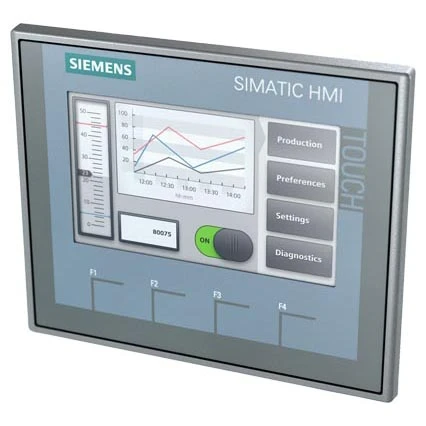
Programmable Logic Controllers (PLCs) are the backbone of modern industrial automation, and Siemens is a leading global provider. The 'BF' designation within Siemens PLCs often indicates a specific product family or feature set tailored for particular applications. This article provides an in-depth exploration of BF Siemens PLCs, covering their applications, advantages, specifications, and how they compare to other models. Understanding these controllers is crucial for engineers, automation professionals, and anyone involved in industrial control systems. Choosing the right PLC can significantly improve efficiency, reduce downtime, and enhance overall productivity. BF Siemens PLCs represent a range within the broader Siemens PLC portfolio. They are typically characterized by their compact size, cost-effectiveness, and suitability for smaller to medium-sized automation tasks. The 'BF' series often features integrated functionalities like communication ports (PROFINET, PROFIBUS), analog and digital I/O, and robust programming capabilities. These PLCs are frequently used in applications such as packaging machines, material handling systems, and small-scale process control. They bridge the gap between simpler micro PLCs and the more complex, high-performance models, offering a versatile solution for a wide array of industrial needs.
-
Comprehensive Guide to Analog Programming in Siemens PLC for Automation Engineers
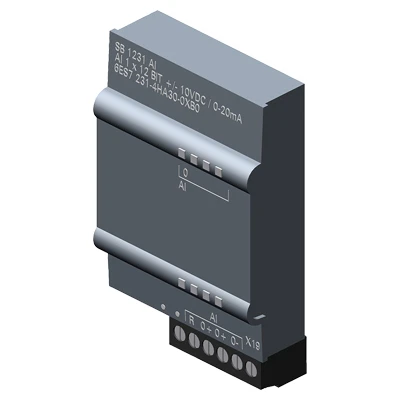
Analog programming in Siemens Programmable Logic Controllers (PLCs) is a fundamental skill for automation engineers. Unlike digital signals which are discrete (on or off), analog signals are continuous and represent values like temperature, pressure, or flow. Mastering analog programming allows for precise control and monitoring of industrial processes. This article will explore the core concepts, techniques, and benefits of utilizing analog programming within Siemens PLCs, providing a detailed overview for both beginners and experienced professionals. Learn how to efficiently implement and troubleshoot analog systems for optimal performance. For robust Siemens PLC solutions, visit Tianjin Yongkai Automation Technology Co., Ltd. Analog signals are typically represented as voltages (0-10V) or currents (4-20mA) within industrial applications. Siemens PLCs, such as those in the S7-1200 and S7-1500 series, offer dedicated hardware modules to interface with these analog signals. These modules contain Analog-to-Digital Converters (ADCs) to convert the analog input into a digital value that the PLC can process, and Digital-to-Analog Converters (DACs) to convert digital values back into analog outputs to control actuators. Properly scaling these inputs and outputs is crucial for accurate control and representation of process values.
-
Comprehensive Guide to the 300 PLC for Industrial Automation
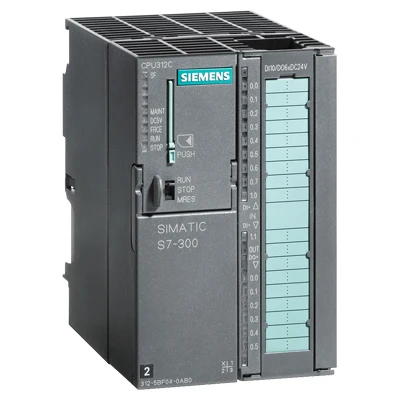
The 300 PLC (Programmable Logic Controller) represents a pivotal component in modern industrial automation. Offering a robust and versatile solution for controlling a wide array of processes, the 300 PLC is a cornerstone for businesses seeking enhanced efficiency and reliability. This article delves into the features, benefits, applications, and selection criteria for the 300 PLC, offering valuable insights for professionals and decision-makers. From optimizing production lines to streamlining complex machinery, the 300 PLC empowers industries to achieve operational excellence. The 300 PLC boasts a modular design, enabling customization to fit specific application needs. Its compact size allows for easy integration into existing systems, while its powerful processing capabilities ensure swift and accurate control. Key features include a variety of I/O (Input/Output) modules, robust communication protocols such as Ethernet/IP and Modbus, and advanced diagnostic tools for efficient troubleshooting.
-
Comprehensive Guide to Siemens PLC Expansion Module Solutions for Automation
In the realm of industrial automation, Siemens Programmable Logic Controllers (PLCs) are renowned for their reliability and performance. As automation systems evolve and grow, the need for increased I/O capabilities becomes paramount. This is where Siemens PLC expansion modules come into play, offering a scalable and cost-effective solution to enhance your PLC system. They enable you to expand the functionality of existing PLCs without the need for a complete system overhaul. This article provides a comprehensive overview of Siemens PLC expansion modules, covering their types, applications, benefits, and key considerations for selection. Siemens offers a diverse range of PLC expansion modules categorized by their I/O type and communication protocol. Common types include digital input (DI) modules, digital output (DO) modules, analog input (AI) modules, analog output (AO) modules, and communication modules. These modules are designed to integrate seamlessly with various Siemens PLC families, such as the SIMATIC S7-1200, S7-1500, and S7-300/400 series.
-
Comprehensive Guide to S7 PLC Programming for Industrial Automation Systems
Siemens S7 PLCs are a cornerstone of industrial automation, known for their reliability and power. S7 PLC programming requires a specific skillset and understanding of the Siemens ecosystem. This article provides a detailed overview of S7 PLC programming, covering the languages used, software options, common applications, and resources for learning. Whether you're a beginner looking to enter the field or an experienced engineer seeking to expand your knowledge, this guide will provide valuable insights. We'll explore the intricacies of this essential skill and how it drives modern industrial processes. Siemens S7 PLCs support multiple programming languages defined by the IEC 61131-3 standard. These languages allow engineers to create logic to control industrial processes. The most commonly used languages include: Ladder Diagram (LAD): A graphical language resembling electrical relay logic. It's intuitive for electricians and those familiar with traditional control systems. Function Block Diagram (FBD): A graphical language using pre-defined function blocks to create complex control logic. Statement List (STL): A low-level, text-based language similar to assembly language. Structured Text (ST): A high-level, text-based language similar to Pascal. It’s often preferred for complex algorithms and data manipulation. Sequential Function Chart (SFC): A graphical language used to describe sequential processes and state machines.
-
Siemens 315 2PN DP A Comprehensive Guide to Industrial Communication
The Siemens 315 2PN DP is a crucial component in various industrial automation systems. This Distributed Peripheral (DP) interface module facilitates communication between Programmable Logic Controllers (PLCs) and distributed I/O devices. Choosing the correct interface for your system is vital for efficient data transfer and reliable operation. This article provides an in-depth look at the Siemens 315 2PN DP, its features, applications, and benefits. Understanding the intricacies of this module will help you optimize your industrial network and improve overall system performance. The Siemens 315 2PN DP boasts several key features that make it a robust and reliable communication module. It supports PROFIBUS DP communication, a widely used standard in industrial automation. It offers a data transfer rate of up to 12 Mbit/s, enabling fast and efficient data exchange. The module features a built-in isolator for increased protection against electrical interference, ensuring stable communication even in harsh industrial environments. It is also designed for easy integration with SIMATIC S7 PLCs and other compatible devices. The module's compact design makes it suitable for space-constrained applications.
-
Comprehensive Guide to the 6ES7972 0CB20 0XA0 Siemens PLC Communication Module
The 6ES7972-0CB20-0XA0 Siemens PLC (Programmable Logic Controller) is a crucial component in industrial automation systems. This article delves into its specifications, applications, benefits, and considerations for effective implementation. Understanding this PLC is essential for engineers, technicians, and anyone involved in industrial control processes. We’ll explore why choosing the right PLC, like the 6ES7972-0CB20-0XA0, is vital for optimizing performance and ensuring reliable operation. The 6ES7972-0CB20-0XA0 is a communication module designed for Siemens SIMATIC S7-1500 PLCs. It’s specifically a PROFIBUS communication module, enabling the PLC to interface with PROFIBUS DP networks. This allows for seamless communication with a wide range of devices, including drives, sensors, and other PLCs. The module supports both master and slave functionality, providing flexibility in network configuration.
-
Understanding Variable Frequency Drives What Does VFD Mean and How They Work
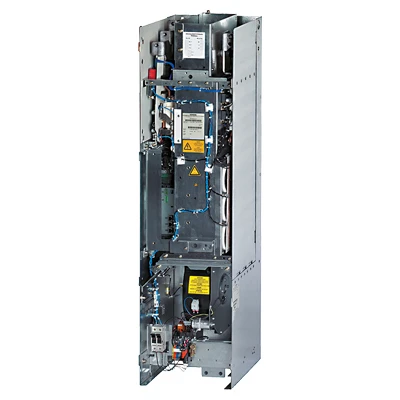
Variable Frequency Drives (VFDs) are becoming increasingly essential in modern industrial applications. But what does VFD actually mean, and how can it benefit your operations? This article will delve into the details of VFDs, exploring their functionality, applications, benefits, and key considerations for implementation. We’ll cover everything from the basic definition to the advantages of using VFDs in various industrial settings, helping you understand whether a VFD is the right solution for your needs. VFD stands for Variable Frequency Drive. It’s a type of motor controller that drives an AC induction motor by varying the frequency and voltage supplied to the motor. Essentially, a VFD allows you to precisely control the speed of the motor, offering significant energy savings and process improvements. Traditionally, motor speed was controlled using mechanical methods like gears or dampers, which were often inefficient. VFDs provide a more sophisticated and efficient solution by electronically controlling the motor’s operation.
-
What Does a VFD Drive Do A Comprehensive Guide to Variable Frequency Drives
A Variable Frequency Drive (VFD), also known as an adjustable speed drive, is a crucial component in modern industrial applications. It's a device that controls the speed of an AC electric motor by varying the frequency and voltage supplied to the motor. This article will delve into the core functionality of VFDs, their benefits, applications, and factors to consider when choosing the right drive for your needs. Understanding VFD drives is essential for optimizing processes and improving energy efficiency. We will explore how they work and why they are a cornerstone of efficient motor control. At its heart, a VFD drive takes incoming AC power and converts it into DC power. Then, it inverts the DC power back into AC power, but with the ability to precisely control the frequency and voltage. By adjusting the frequency, the VFD directly controls the speed of the motor. Lowering the frequency slows the motor, while increasing the frequency speeds it up. Crucially, the VFD also maintains a constant voltage-to-frequency ratio to ensure the motor receives the appropriate power for optimal performance.
-
What Does a VFD Do For a Motor Understanding Benefits and Applications
Variable Frequency Drives (VFDs) have revolutionized industrial motor control. But what does a VFD do for a motor exactly? Simply put, a VFD controls the speed of an electric motor by varying the frequency and voltage supplied to the motor. This precise control offers numerous benefits, from energy savings and improved process control to extended equipment life. This article will explore the functions, advantages, applications, and key considerations when implementing a VFD system. Understanding these aspects is crucial for maximizing efficiency and minimizing costs in your operations. At its heart, a VFD takes standard AC power and converts it into a variable-frequency, variable-voltage power source. This is accomplished through a process involving rectification, filtering, and inversion. The rectification stage converts AC to DC. The filtering stage smooths the DC voltage. The final inversion stage then transforms the DC voltage back into AC, but at a controlled frequency and voltage.
-
Comprehensive Guide to the Siemens 6ES7212 1HE40 0XB0 PLC Analog Output Module
The Siemens 6ES7212-1HE40-0XB0 is a critical component within the SIMATIC S7-200 Programmable Logic Controller (PLC) series. It’s an analog output module, designed for industrial automation applications requiring precise control signals. This article offers a comprehensive guide to the module's features, specifications, applications, and where to source a reliable supply. Understanding this module is vital for engineers, technicians, and procurement professionals involved in automation projects. The Siemens 6ES7212-1HE40-0XB0 boasts several key features making it a popular choice in diverse industrial settings. It provides two analog outputs, each capable of delivering a 0-10V DC or 4-20mA signal. This flexibility accommodates a wide range of sensors and actuators. The module's 12-bit resolution ensures accurate and precise control, while its optical isolation provides protection against electrical noise and interference.
-
Siemens 6FC5371-0AA30-0AB0 Drive Head
Explore the Siemens 6FC5371-0AA30-0AB0 drive head, a critical component in industrial automation. Specs, vendors, and real-world insights.