Comprehensive Guide to Variable Frequency Drives Working Principle | Energy Efficient Motor Control
Understanding the Variable Frequency Drives Working Principle
If you've ever wondered how electric motors adjust speeds so smoothly across so many industries—from HVAC systems in towering buildings to high-precision manufacturing lines—the variable frequency drives working principle is at the heart of it all. At its core, this principle allows for the control of motor speed and torque by varying the frequency and voltage supplied to an electric motor. The global significance? According to International Energy Agency (IEA) reports, motors consume nearly 45% of all electricity globally, and variable frequency drives (VFDs) account for some of the most impactful energy savings achievable in modern industrial and commercial settings.
Understanding how VFDs operate is not just a technical curiosity; it’s a key to unlocking enhanced energy efficiency, reduced carbon emissions, and greater machinery longevity worldwide. This is why grasping the variable frequency drives working principle matters—not just for engineers but for anyone involved in energy policy, sustainability, and even humanitarian efforts where efficient power use can be a lifeline.
Global Context: Why Variable Frequency Drives Matter Now More Than Ever
The UN Sustainable Development Goals push for cleaner energy and improved industrial innovation. Energy-efficiency technologies such as VFDs are a critical part of this agenda. For example, the World Bank estimates that industrial motor-driven systems worldwide consume approximately half of global electricity, and inefficient speed controls waste at least 20–30% of that. That’s a huge problem when set against rising energy costs and environmental concerns.
The challenges often revolve around outdated systems locked into fixed-speed motors, which run inefficiently when load demands fluctuate. This mismatch between output and energy input means wasted electricity and greater greenhouse gas emissions. VFDs plug right into this problem by allowing motors to operate precisely at the required speed.
What Exactly is the Variable Frequency Drives Working Principle?
In simplest terms, a variable frequency drive controls the speed of an AC motor by adjusting the frequency and voltage of the electrical power it receives. Think of frequency as the ‘pulse’ of the electric supply that drives the motor’s rotation speed. By varying this pulse speed—and coordinating voltage accordingly—the motor can ramp up or slow down smoothly and efficiently.
So, rather than a motor running at a fixed 60 Hz (or 50 Hz depending on your region) all the time, a VFD lets you dial it in anywhere from zero up to its maximum, adapting in real-time to operational demands.
This isn’t just theoretical: in sectors like water treatment, HVAC, manufacturing, and even renewable energy integration, this flexibility means optimized performance, less wear and tear, and a more responsible use of energy resources.
Core Components of Variable Frequency Drives
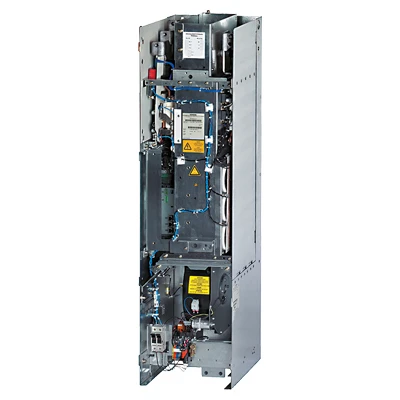
- Rectifier Section: Converts incoming AC power to DC. It’s the first step in managing the output frequency.
- DC Bus: Serves as an energy reservoir, smoothing out electrical signals between conversion and inversion.
- Inverter Section: Converts DC back to an adjustable AC waveform. This is where the frequency gets dialed in.
- Control Unit: The digital brain, using sensors and algorithms to fine-tune output frequency and voltage based on load demands.
- Feedback Sensors: Monitor motor speed and torque to inform the control unit, ensuring precision and stability.
These parts work together to provide the dynamic control necessary for efficiency and reliability. Engineers often note that it feels like orchestrating an electrical dance—quite graceful for something so technical.
Product Specifications Snapshot
| Specification | Typical Range | Units |
|---|---|---|
| Input Voltage | 200 - 600 | Volts AC |
| Output Frequency | 0 - 400 | Hz |
| Power Rating | 0.5 - 5000 | kW |
| Control Type | V/f, Vector Control, Direct Torque Control | - |
Global Applications and Real-World Use Cases
Variable frequency drives aren’t limited to factories; their usage spans a dizzying array of sectors internationally.
- Industrial Manufacturing: In Germany’s automotive plants or South Korea’s electronics factories, VFDs adjust motor speeds on assembly lines with precision, reducing downtime and energy waste.
- Water Utilities: In arid regions like the Middle East, pumping stations rely on VFDs to modulate flow rates, optimizing scarce water resources.
- HVAC Systems: Commercial buildings in North America use VFDs extensively for fan and compressor control, cutting cooling and heating costs substantially.
- Renewable Energy: Wind turbines use variable frequency drives to connect varying rotational speeds to grid frequency requirements.
Oddly enough, even post-disaster relief setups sometimes utilize portable generators with VFD-based control to stabilize power for sensitive equipment. You can spot this technology quietly working everywhere from urban skyscrapers to remote industrial hubs.
Vendor Comparison
| Vendor | Power Range (kW) | Control Methods | Price (Approx.) | Notable Feature |
|---|---|---|---|---|
| Siemens | 0.37 - 5000 | V/f, Vector | $$$ | Robust industrial grade & global support |
| Schneider Electric | 0.18 - 4000 | V/f, Direct Torque | $$$ | Energy-saving algorithms & IoT enabled |
| Tian Jin Yong Kai | 0.5 - 3000 | V/f, Vector | $ - $$ | Cost-effective, reliable drives tailored for Asian markets |
Advantages & Long-Term Benefits
Variable frequency drives embody a blend of economic and ecological sense. The obvious advantage is energy savings—which directly translate into lower operating costs. Industries with motors running 24/7 can often cut bills by up to 30% after retrofitting with VFDs. Plus, the gentle ramping up/down reduces wear on mechanical components, boosting equipment lifespan.
Beyond dollars and kilowatt-hours, there’s an emotional satisfaction—knowing that your machinery runs safer, with fewer mechanical stresses and less risk of sudden breakdowns. It’s about innovation that respects both human effort and the planet’s finite resources.
Emerging Trends & Innovations
Looking ahead, the variable frequency drives working principle intersects neatly with digital transformation. Integration with IoT and cloud analytics lets engineers monitor and optimize motor performance remotely, predicting failures before they disrupt production. On the sustainability front, VFDs are becoming standard in smart grids and renewable energy systems, marrying clean power generation with efficient consumption.
Materials are also evolving—new semiconductor technologies improve inverter efficiency, and compact designs make VFDs feasible in even smaller spaces than before. It feels like the technology keeps getting smarter and leaner, just as industries crave.
Common Challenges and Solutions
Of course, no tech is perfect. VFDs can produce harmonic distortions in power networks, which if unmanaged, cause equipment interference and efficiency loss. Many engineers tackle this with harmonic filters or multi-pulse rectifiers. Also, the initial cost and complexity may intimidate smaller operators. But with continued cost reductions and easier user interfaces, adoption barriers are steadily lowering.
Consulting experts who specialize in drive system optimization ensures that installations not only meet performance requirements but also align with sustainability goals—offering a true ‘win-win.’
Frequently Asked Questions About Variable Frequency Drives Working Principle
- Q: How does a variable frequency drive reduce energy consumption in HVAC systems?
A: By adjusting motor speed to match the actual load demand rather than running at full speed continuously, VFDs cut unnecessary power use, reducing energy waste and costs significantly. - Q: Are variable frequency drives suitable for all types of AC motors?
A: Most squirrel cage induction motors are compatible with VFDs, but some specialized motors may need additional considerations. It’s best to consult with a manufacturer or expert to verify compatibility. - Q: Can VFDs help reduce maintenance costs?
A: Yes, by enabling soft starts and stops, reducing mechanical stress, and providing fault diagnostics, VFDs can extend motor life and reduce unplanned downtime. - Q: What is the typical lifespan of a variable frequency drive?
A: Lifespan depends on operating conditions and quality, but generally ranges from 10 to 15 years with proper maintenance. - Q: How does digital control improve VFD effectiveness?
A: Digital controls allow for real-time adjustments and advanced algorithms that optimize motor performance, improve energy efficiency, and enable predictive maintenance.
Mini takeaway: Understanding the variable frequency drives working principle reveals a cornerstone technology in modern energy management, key to efficiency and sustainability worldwide.
Conclusion
In real terms, the variable frequency drives working principle isn’t just an esoteric engineering concept — it’s a practical tool helping industries reduce energy consumption, lower costs, and improve operational agility. As the world leans harder toward sustainable development and smarter infrastructure, VFDs will keep playing a pivotal role.
Curious to dig deeper? Visit our website: variable frequency drives working principle to explore specialized solutions that might just revolutionize your power management approach.
Stay curious and keep efficient.
References: