In the landscape of modern industrial automation, the single phase variable frequency drive serves as a critical bridge between standard residential or light commercial power supplies and the precise demands of motor control. By allowing operators to adjust the speed and torque of an electric motor without requiring a three-phase power grid, these devices unlock immense potential for small-scale manufacturing and specialized machinery.
The global shift toward energy efficiency and decentralized production has placed the single phase variable frequency drive at the forefront of operational optimization. Whether it is reducing the wear and tear on mechanical components through soft-start capabilities or slashing energy costs by matching motor speed to actual load requirements, the impact on the bottom line is immediate and measurable.
Understanding the nuances of these drives is no longer just for electrical engineers; it is essential for any business owner or plant manager looking to modernize their equipment. By mastering the deployment of a single phase variable frequency drive, companies can achieve a level of precision and scalability that was previously reserved for heavy-industrial facilities with full three-phase infrastructure.
The Global Relevance of Single Phase Variable Frequency Drives
Across the globe, the demand for flexible power solutions has surged as small-to-medium enterprises (SMEs) seek to automate their production lines. In many regions, especially in developing industrial zones or remote workshops, access to three-phase power is either non-existent or prohibitively expensive to install. The single phase variable frequency drive solves this infrastructural bottleneck, enabling high-performance motor control using standard single-phase AC inputs.
This accessibility is not merely a convenience but a driver of economic growth. By adhering to international ISO standards for electrical safety and efficiency, these drives allow local manufacturers to compete on a global scale by implementing precision automation that reduces waste and improves product consistency, effectively leveling the playing field between small workshops and large factories.
Defining the Single Phase Variable Frequency Drive
At its core, a single phase variable frequency drive (VFD) is an electronic device that converts a fixed-voltage, single-phase AC power source into a variable-voltage, variable-frequency output. This allows it to control the speed and torque of an electric motor—typically a three-phase motor—by synthesizing a three-phase output from a single-phase input. This conversion process is essential for applications where precise speed control is required but the facility is limited to domestic-style power.
In the context of modern industrial needs, this technology represents a shift toward "democratic automation." It removes the requirement for expensive electrical upgrades, allowing a wide array of tools—from conveyor belts to centrifugal pumps—to be integrated into a smart system. By modulating the frequency of the electricity delivered to the motor, the VFD ensures that the motor only consumes the energy necessary for the task at hand.
Furthermore, the integration of these drives into current humanitarian and infrastructure projects is profound. In remote medical clinics or water treatment plants in rural areas, where only single-phase power is available, a single phase variable frequency drive enables the operation of critical pumping and ventilation systems, ensuring stability and reliability in environments where failure is not an option.
Core Components for Maximum Reliability
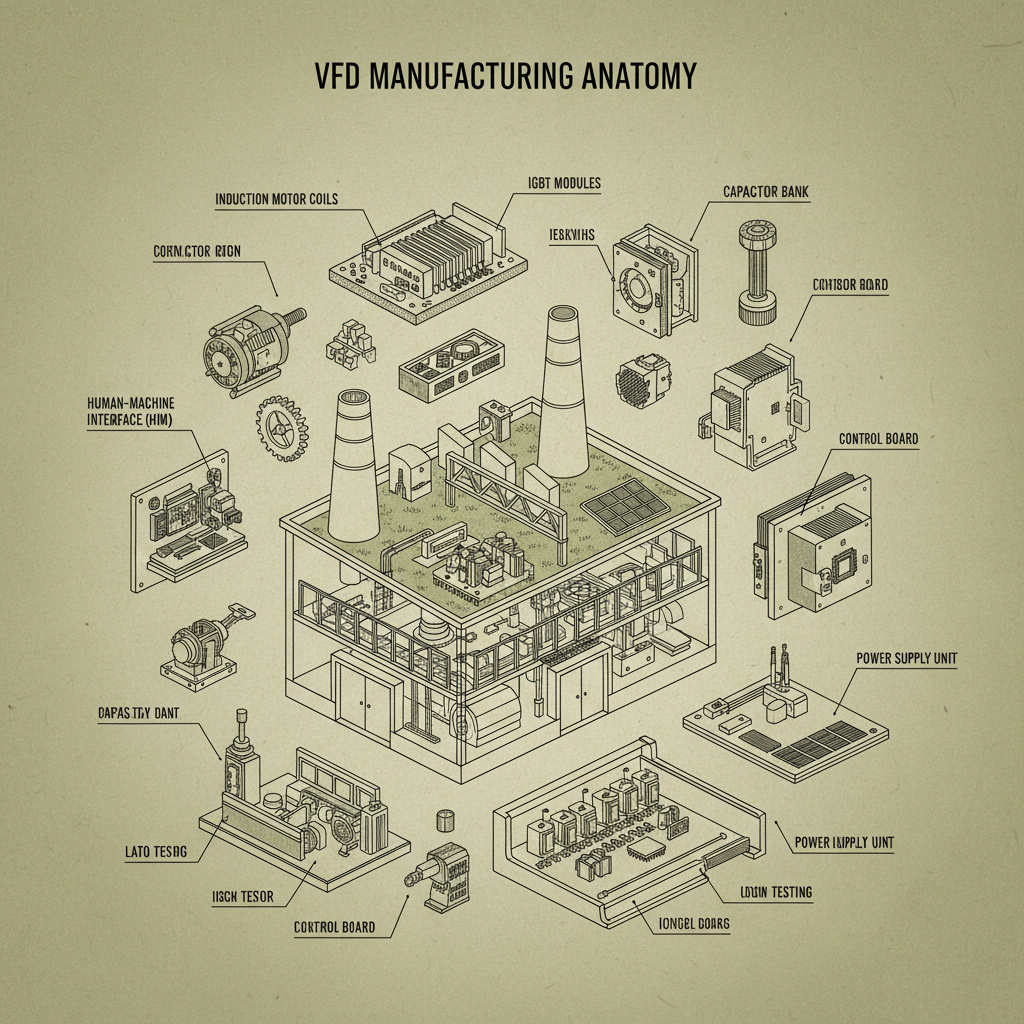
The reliability of a single phase variable frequency drive hinges on its rectifier stage. This initial component converts the incoming AC power into DC power, smoothing out voltage ripples to provide a stable base for the subsequent inversion process. High-quality capacitors are used here to ensure that voltage sags do not lead to motor instability.
The "brain" of the operation is the Inverter Stage, typically utilizing Insulated Gate Bipolar Transistors (IGBTs). This stage is where the magic happens: the DC power is switched at high frequencies to create a simulated three-phase AC output. The precision of this switching determines the smoothness of the motor's rotation and the overall efficiency of the single phase variable frequency drive.
Finally, the Control Logic and Thermal Management systems ensure longevity. Advanced microprocessors monitor the motor's load in real-time, adjusting the output to prevent overheating. Coupled with robust heat sinks and cooling fans, these components protect the drive from the harsh electrical noise and temperature fluctuations common in industrial environments.
Key Performance Factors and Cost Efficiency
When evaluating the efficiency of a single phase variable frequency drive, one must look beyond the initial purchase price. The true value lies in the reduction of "Inrush Current." Traditional motors drawing full power upon startup can create massive electrical spikes; a VFD eliminates this by ramping up speed gradually, protecting the local electrical grid and extending the motor's lifespan.
Moreover, the scalability offered by these drives allows businesses to expand their operations without rewriting their electrical blueprints. By implementing a modular approach to motor control, companies can add new equipment to a single-phase circuit while maintaining a high degree of energy precision.
Efficiency Comparison of Single Phase Drive Methods
Global Industrial Applications and Use Cases
In real-world contexts, the application of the single phase variable frequency drive spans across diverse sectors. In the textile and garment industry across Southeast Asia, these drives are used to control the speed of sewing machines and fabric rollers, allowing for intricate patterns and high-quality finishes without the need for heavy industrial power grids.
Beyond traditional manufacturing, we see these devices in remote industrial zones, such as artisanal mining or agricultural irrigation in Sub-Saharan Africa. In these scenarios, a single phase variable frequency drive allows for the precise control of water pumps, ensuring that crops receive the exact amount of hydration needed while preventing the motor from burning out during unpredictable power fluctuations.
Long-Term Value and Sustainability Benefits
The long-term value of adopting a single phase variable frequency drive extends far beyond simple energy savings. From a sustainability perspective, these drives reduce the overall carbon footprint of a facility by eliminating wasted energy. When a motor runs at 100% speed but only needs to provide 50% output, the excess energy is dissipated as heat; a VFD eliminates this waste, directly contributing to global green energy goals.
From an emotional and logical angle, the use of these drives fosters a culture of innovation and trust. Operators feel more secure knowing that their equipment is protected from surges, and business owners can trust that their investment in automation is scalable. This reliability creates a safer working environment where machinery behaves predictably.
Furthermore, the reduction in mechanical stress—thanks to the elimination of abrupt starts and stops—significantly lowers the frequency of maintenance interventions. This not only saves money but also preserves the dignity of the workforce by reducing emergency repairs and downtime, allowing for a more structured and professional operational flow.
Future Trends in Single Phase Drive Technology
Looking ahead, the evolution of the single phase variable frequency drive is being shaped by the "Industrial Internet of Things" (IIoT). Future drives will not only control speed but will act as data hubs, transmitting real-time performance metrics to the cloud. This digital transformation will allow for predictive maintenance, where the drive can alert an operator to a potential bearing failure before it actually occurs.
We are also seeing a shift toward Wide-Bandgap (WBG) semiconductors, such as Gallium Nitride (GaN) and Silicon Carbide (SiC). These materials allow the inverter stage to operate at higher temperatures and higher frequencies with significantly lower energy losses, making the next generation of drives even smaller and more efficient.
As global policies tighten around energy consumption, the integration of these drives with renewable energy sources—like solar arrays in off-grid locations—will become standard. The ability to seamlessly interface a single phase variable frequency drive with a DC solar input will revolutionize how remote industrialization is approached.
Comparative Analysis of Single Phase VFD Implementation Strategies
| Implementation Strategy |
Energy Efficiency |
Installation Cost |
Operational Lifespan |
| Direct Online Start |
Low (3/10) |
Very Low |
Short (High Wear) |
| Basic Single Phase VFD |
Medium (6/10) |
Moderate |
Average |
| High-Efficiency VFD |
High (9/10) |
High |
Long (Optimized) |
| Smart-IoT Integrated Drive |
Ultra (10/10) |
Very High |
Predictive/Extended |
| Soft Starter Hybrid |
Medium (5/10) |
Moderate |
Average |
| Regenerative Single Phase |
High (8/10) |
High |
Long |
FAQS
Yes, that is the primary function of this device. It takes a single-phase input and uses an internal inverter to create a simulated three-phase output. This allows you to use efficient three-phase motors in locations where only single-phase power is available, providing the benefit of three-phase torque and stability without the need for expensive utility upgrades.
Energy savings vary by application, but for centrifugal loads like fans and pumps, savings can range from 20% to 50%. Because the power consumption of these loads drops cubically with speed, reducing the motor speed by just 20% can lead to a massive reduction in energy use, significantly lowering operational costs over time.
Generally, it does the opposite by reducing mechanical stress. However, you must ensure the motor is "inverter-duty" rated. Standard motors may experience insulation breakdown due to voltage spikes created by the VFD's high-frequency switching. Using a properly matched single phase variable frequency drive with an appropriate motor ensures maximum longevity.
A soft starter only controls the motor during the startup and shutdown phases to reduce current spikes. A VFD, however, provides continuous control over the motor's speed throughout the entire operation. If you only need to prevent a surge at start, a soft starter suffices; if you need to modulate speed for production, a VFD is required.
Modern drives are designed with user-friendly interfaces. Most come with pre-set parameters for common industrial applications. While basic installation is straightforward (connecting input and output power), fine-tuning the acceleration ramps and frequency limits may require a technical manual or a professional technician to ensure optimal motor performance.
Absolutely. This is one of the most common use cases. Many workshop tools, such as lathes or milling machines, benefit from variable speed control. By installing a single phase variable frequency drive, you can adapt professional-grade three-phase machinery to work perfectly on a standard 110V or 220V home outlet.
Conclusion
The integration of a single phase variable frequency drive represents a pivotal shift in how we approach industrial automation and energy management. By bridging the gap between limited power infrastructure and high-performance motor requirements, these devices empower small-scale manufacturers and remote operators to achieve unprecedented precision, reliability, and efficiency. From the reduction of inrush currents to the adoption of IIoT-driven predictive maintenance, the value proposition is clear: lower costs, higher productivity, and a significantly smaller environmental footprint.
As we move toward a future defined by green energy and decentralized production, the role of these drives will only grow. We recommend that businesses audit their current motor-driven equipment to identify opportunities where speed modulation could reduce wear and energy waste. Investing in high-quality VFD technology today is not just an operational upgrade—it is a strategic move toward a more sustainable and competitive industrial future. For more professional solutions and technical guidance, visit our website: www.tianjinyongkai.com