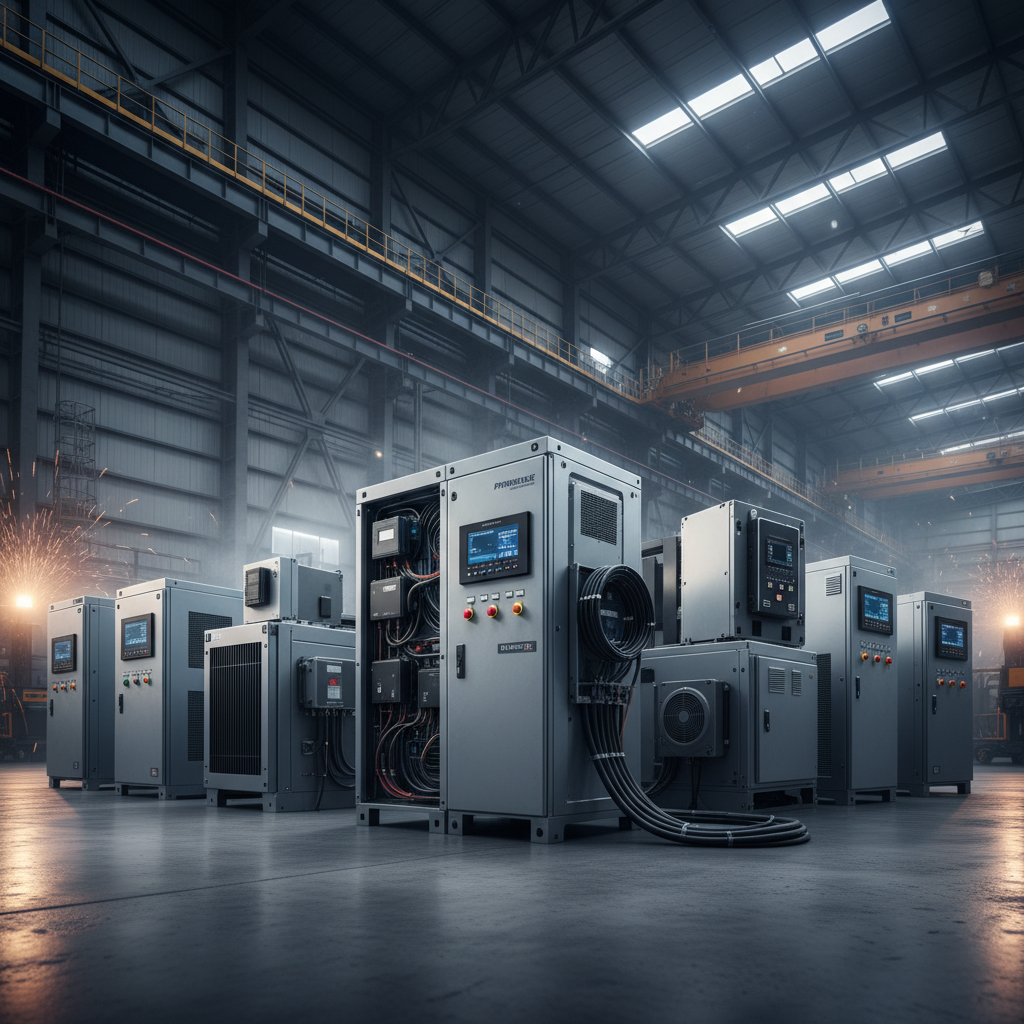
The integration of a 3 phase vfd controller in modern industrial automation has become a cornerstone for enhancing energy efficiency and precision control. By regulating the frequency and voltage supplied to electric motors, these systems allow for seamless speed adjustments, reducing mechanical stress and optimizing power consumption across various manufacturing sectors.
Globally, the shift toward Industry 4.0 has accelerated the demand for sophisticated motor control solutions. A 3 phase vfd controller addresses the critical challenge of power waste and equipment wear, providing a sustainable pathway for factories to increase throughput while adhering to stricter international energy standards and reducing operational overhead.
Understanding the nuances of these systems is essential for engineers seeking to maintain high-performance standards in electrical machinery. By implementing a high-quality 3 phase vfd controller, companies can ensure their automation lines are resilient, scalable, and capable of handling complex load variations with absolute precision.
Signal Integrity and Electrical Isolation
Electrical isolation is a critical feature in the design of high-performance modules used alongside a 3 phase vfd controller. Most modern modules are engineered with robust isolation barriers to prevent high-frequency interference signals from leaking into sensitive control circuits, which ensures that output accuracy remains uncompromised even in noisy electrical environments.
By decoupling the power stage from the control logic, these systems protect the CPU and peripheral sensors from voltage spikes and electromagnetic interference (EMI). This architectural choice is vital for maintaining the stability of the drive system, preventing erratic motor behavior and ensuring the longevity of the electronic components.
Diagnostic Intelligence and Troubleshooting
One of the most significant advantages of incorporating advanced diagnostic functions into a 3 phase vfd controller system is the drastic reduction in downtime. Integrated diagnostics allow the system to monitor its own health in real-time, identifying anomalies before they lead to catastrophic failure.
Specific features such as short-circuit detection and over-range alarms provide operators with immediate feedback regarding the state of the hardware. When a fault occurs, the controller can trigger a safe shutdown or alert the maintenance team with precise error codes, eliminating the need for time-consuming manual probing.
This proactive approach to maintenance shifts the operational paradigm from reactive repair to predictive optimization. By leveraging these built-in diagnostic tools, industrial plants can maintain higher availability rates and ensure that their 3 phase vfd controller operates within safe parameters at all times.
Modular Architecture and Scalability
The shift toward modular design in the context of a 3 phase vfd controller allows for unprecedented flexibility in factory layout and system expansion. Instead of replacing entire control panels, users can simply add or swap specific modules to meet evolving production requirements.
A modular structure simplifies the maintenance process, as faulty components can be replaced individually without disrupting the rest of the system. This granularity ensures that a 3 phase vfd controller can be tailored to specific load requirements, whether for a small conveyor belt or a massive industrial pump.
Furthermore, this design philosophy enables rapid prototyping and easier upgrades. As new technology emerges, the 3 phase vfd controller ecosystem can be updated piece by piece, protecting the initial capital investment while keeping the facility at the cutting edge of automation.
Real-Time Communication and Backplane Integration
High-speed data transmission is essential for the synchronization of multiple drives. By utilizing a dedicated backplane bus for communication between the CPU module and the 3 phase vfd controller, systems can achieve extremely low latency and strong real-time performance.
This seamless integration ensures that command signals are executed instantaneously, which is crucial for precision applications like CNC machining or robotic arm coordination. The backplane architecture eliminates the cabling complexity typically associated with traditional point-to-point wiring.
Performance Efficiency of 3 phase vfd controller Configurations
Global Industrial Applications
From the automotive assembly lines in Germany to the textile mills of Southeast Asia, the 3 phase vfd controller is utilized to optimize torque and speed. In heavy engineering machinery, these controllers allow for "soft starts," which prevent the massive current inrush that could otherwise damage the electrical grid or the motor itself.
In remote industrial zones or post-disaster reconstruction areas, the reliability of such controllers is paramount. They ensure that critical water pumping stations and ventilation systems operate efficiently even with fluctuating power quality, providing a stable infrastructure for humanitarian and economic recovery.
Long-Term Operational Value
The long-term value of a 3 phase vfd controller extends beyond simple energy savings. By reducing mechanical wear and tear through controlled acceleration and deceleration, companies see a significant increase in the mean time between failures (MTBF) for their mechanical hardware.
Sustainability is another core benefit. Reducing the carbon footprint of a facility is no longer optional; it is a regulatory requirement in many regions. The precision of a 3 phase vfd controller ensures that energy is consumed only when and where it is needed, aligning industrial growth with environmental stewardship.
Ultimately, the investment in high-end motor control fosters trust and safety. Operators can rely on the system's diagnostic alarms to prevent accidents, ensuring a safer working environment and upholding the dignity of the workforce through the implementation of reliable, modern technology.
Future Trends in Motor Control
The future of the 3 phase vfd controller is inextricably linked to digital transformation. We are seeing a move toward "Smart VFDs" that utilize AI and machine learning to automatically optimize motor parameters based on the real-time load, further reducing energy waste without human intervention.
Integration with cloud-based monitoring systems will allow engineers to manage fleets of controllers from a central location. This global visibility will enable predictive maintenance on a massive scale, where a 3 phase vfd controller in one plant can "learn" from a failure in another plant to prevent a similar occurrence.
As green energy sources like wind and solar become more prevalent, the ability of the controller to handle unstable input voltages will become critical. New materials, such as Silicon Carbide (SiC) semiconductors, are expected to make the next generation of controllers smaller, faster, and more efficient.
Comparative Analysis of 3 phase vfd controller Implementation Strategies
| Strategy Type |
Isolation Level |
Diagnostic Depth |
Scalability Score |
| Standard Fixed |
Basic |
Simple Alarms |
3/10 |
| Modular Basic |
Moderate |
Short-circuit Det. |
6/10 |
| Advanced Isolated |
High |
Full Range Alarm |
8/10 |
| Bus-Integrated |
Very High |
Real-time Diagnostics |
9/10 |
| AI-Optimized |
Extreme |
Predictive Analysis |
10/10 |
| Hybrid Custom |
Variable |
Custom Logic |
7/10 |
FAQS
Electrical isolation prevents high-voltage noise and interference signals from entering the control circuitry. This ensures that the 3 phase vfd controller can maintain precise speed and torque outputs without being affected by the electrical "noise" typically found in heavy industrial environments, thereby increasing overall system accuracy and stability.
Modern 3 phase vfd controller systems typically include short-circuit detection, over-range alarms, and over-voltage protection. These functions allow the system to identify faults instantly and provide specific error codes, which helps maintenance teams quickly troubleshoot and resolve issues without guessing.
A modular design allows users to expand their system easily as production needs grow. For a 3 phase vfd controller, this means adding new modules or upgrading specific components without needing to redesign the entire control architecture, which significantly lowers long-term costs and reduces installation downtime.
Yes, by adjusting the motor speed to match the actual load requirement rather than running at full speed constantly, a 3 phase vfd controller drastically reduces energy consumption. This is especially effective in centrifugal pumps and fans, where a small reduction in speed leads to a large reduction in power use.
The backplane bus enables high-speed, real-time communication between the CPU and the 3 phase vfd controller module. This eliminates the need for extensive external wiring and ensures that control commands are delivered with minimal latency, which is essential for high-precision automation tasks.
Absolutely. Due to their ability to manage voltage fluctuations and provide robust protection through isolation and diagnostics, these controllers are ideal for remote areas where power quality may be inconsistent, ensuring that critical machinery remains operational and protected.
Conclusion
The implementation of a 3 phase vfd controller represents a strategic upgrade for any industrial operation seeking to balance performance with efficiency. By leveraging electrical isolation, modular architecture, and real-time diagnostic intelligence, these systems not only protect expensive motor assets but also drive significant reductions in energy costs and operational downtime.
Looking ahead, the convergence of motor control and digital intelligence will continue to redefine manufacturing. We encourage plant managers and engineers to prioritize scalable, modular solutions that can evolve with the demands of the global market. To explore the best solutions for your facility, visit our website: www.oukeconstruction.com