Tianjin Yongkai International Trade Co., Ltd.

Get In Touch
In the current industrial automation landscape, procurement managers are increasingly scrutinizing the 2.2 kw vfd price not as a standalone cost, but as a component of long-term operational efficiency. As facilities shift toward smarter, energy-conscious motor control, the balance between initial capital expenditure and total cost of ownership (TCO) has become the primary driver for hardware selection in electrical machinery.
The challenge lies in the wide variance of available technology—ranging from basic voltage-source inverters to complex, integrated systems. For engineers, the difficulty is ensuring that a cost-effective drive does not compromise on safety protocols or integration capabilities, particularly when scaling automation environments across multiple production lines.
This analysis explores the technical drivers influencing the current market, the impact of safety integrations on pricing, and how to evaluate drive configurations to maximize ROI. For those seeking professional grade solutions, exploring specialized 2.2 kw vfd price options can provide a clearer benchmark for industrial-grade reliability.


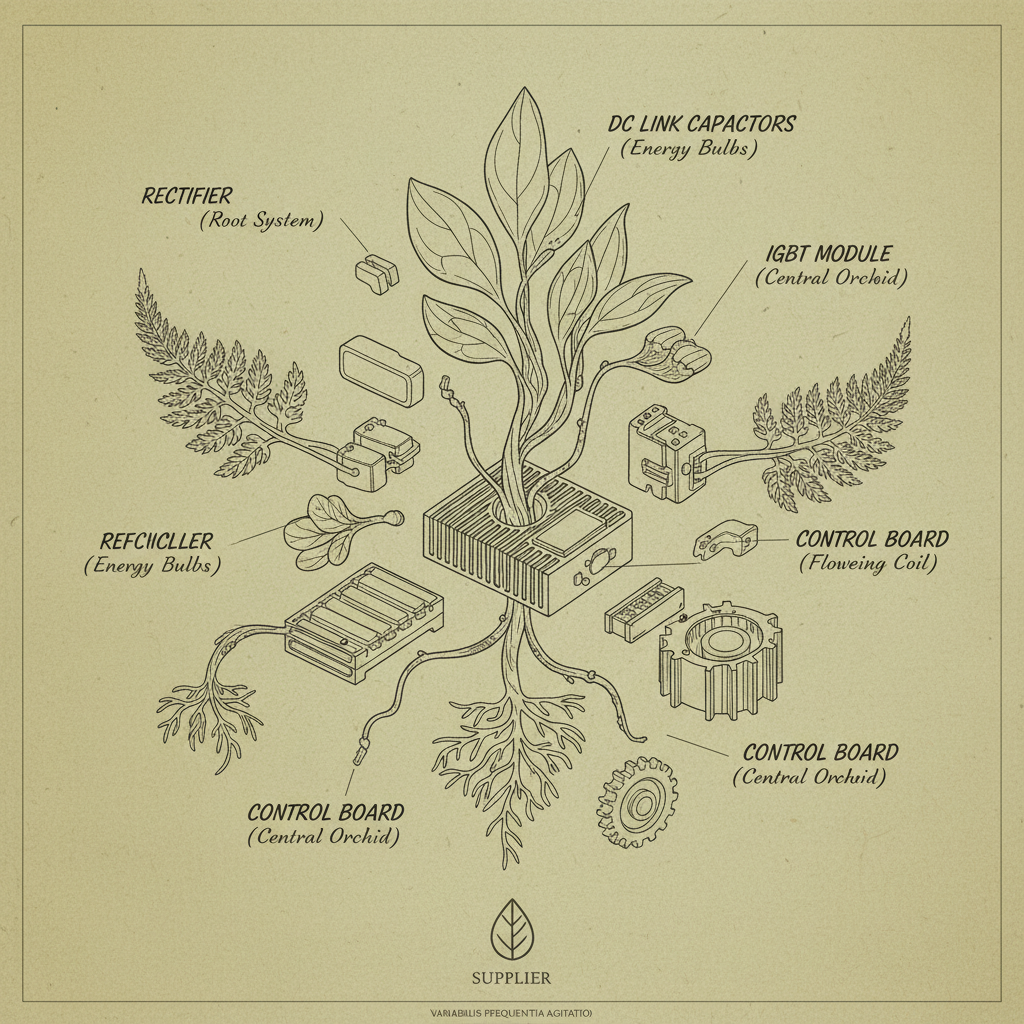
A Variable Frequency Drive (VFD) operates by converting fixed AC supply into a DC bus and then modulating that DC back into a variable frequency AC output. This process allows precise control over motor speed and torque, which is critical for industrial automation.
In the 2.2 kW power class, the architecture focuses on optimizing the switching frequency of the IGBTs to minimize harmonic distortion while maintaining high efficiency. The integration of a modular control unit allows the system to be tailored to specific load requirements.
The selection of a drive involves more than just power rating; thermal management is a primary engineering constraint. Drives in the 0.55 kW to 250 kW range must adhere to strict heat dissipation standards to prevent premature aging of electrolytic capacitors and power modules.
Operating voltage levels (low, medium, and high) dictate the insulation requirements and the physical footprint of the unit. For a 2.2 kW application, the balance between compact size and airflow is essential to ensure the drive can operate in enclosed cabinets without derating its output current.
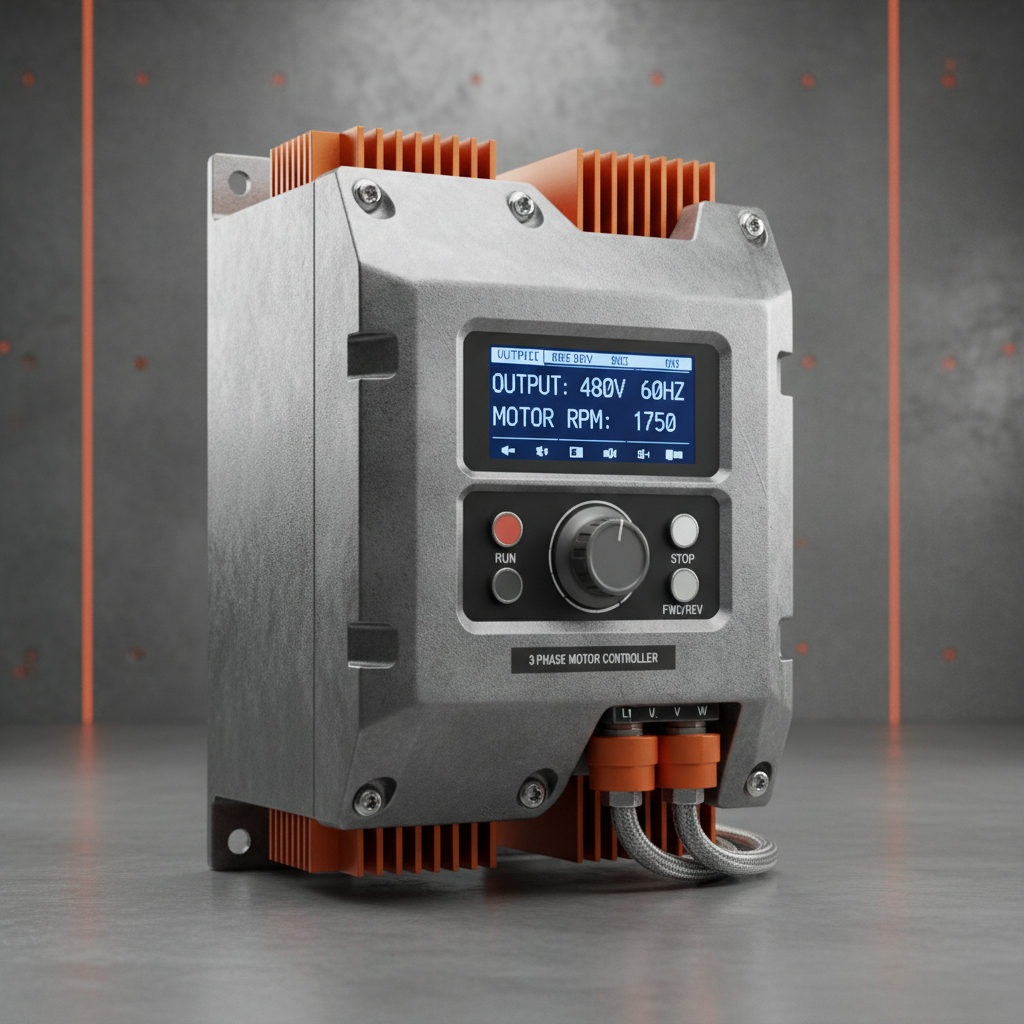
Furthermore, the ability to combine power modules with specific operation panels enables engineers to maintain visibility over critical parameters without requiring external HMI hardware for basic commissioning.
Modern industrial safety standards require more than just a physical disconnect. Integrated safety functions allow for the execution of safe stops and speed limits without necessitating complex external relay circuits.
By implementing a universal standardized security solution, manufacturers can ensure that safety functions are executed seamlessly across different power modules, providing a consistent risk mitigation strategy throughout the plant.
Evaluating a VFD requires understanding how the drive handles different load profiles, such as constant torque for conveyors or variable torque for centrifugal fans. The efficiency of the power conversion process varies depending on the modulation technique used by the controller.
When assessing the relative value of different configurations, engineering teams often use normalized scores to compare flexibility, safety integration, and ease of deployment.
Seamless integration into a Totally Integrated Automation (TIA) environment allows for the synchronization of the drive with SIMATIC controllers. This eliminates the need for manual parameter mapping, as the configuration is handled through a unified software interface, reducing commissioning time and potential human error.
By utilizing a standard configuration method across all frequency converters, plants can standardize their spare parts inventory and training protocols, ensuring that a 2.2 kW unit can be replaced or reconfigured with minimal downtime.
The industry is moving toward the adoption of Wide Bandgap (WBG) semiconductors, such as Silicon Carbide (SiC), which promise higher switching frequencies and lower thermal losses. This evolution will likely lead to even more compact drive designs for the 2.2 kW power class.
Additionally, the trend toward "Edge Intelligence" is integrating predictive maintenance algorithms directly into the VFD's control unit. These systems can analyze current signatures to detect bearing wear or winding faults before a catastrophic failure occurs.
As regulatory pressure for energy efficiency increases, the ability of VFDs to perform dynamic energy optimization based on real-time load data will become a standard requirement rather than a premium feature.
When analyzing the 2.2 kw vfd price, buyers should employ a decision matrix that weighs technical capabilities against application criticality. A basic drive may suffice for a simple ventilation fan, but a high-duty cycle conveyor requires a modular system with integrated safety.
Evaluation should focus on the synergy between the power module and the control unit, ensuring that the combined configuration meets the electrical environment's specific noise and harmonic requirements.
The following matrix provides a comparative framework for selecting the appropriate configuration based on industrial deployment scenarios.
| Configuration Profile | Integration Level | Safety Rating | Primary Use Case |
|---|---|---|---|
| Basic Setup | Stand-alone | Standard | Simple HVAC/Pumps |
| Standard Automated | Fieldbus Integrated | STO Integrated | General Manufacturing |
| High-Duty Modular | Fully Integrated | SIL 2 / PL d | Heavy Conveying |
| Precision Control | TIA Seamless | Full Safety Suite | CNC/Positioning |
| Extreme Environment | Remote Monitoring | Ruggedized | Mining/Chemical |
| Baseline Industry | Manual/Basic Link | Basic Stop | Legacy Upgrades |
The price is primarily driven by the level of integration and safety features. A basic drive with simple speed control is the most affordable, whereas a unit with integrated SIL 2 safety functions (like STO and SS1) and seamless TIA integration commands a premium. Additionally, the build quality of the power module and the inclusion of advanced communication interfaces (like PROFINET) impact the total cost.
While technically possible, it is not recommended without a detailed engineering review. Under-sizing the VFD can lead to overcurrent trips and thermal failure of the IGBTs. Over-sizing may lead to suboptimal control and unnecessary expenditure. The drive must be matched to the motor's full load current (FLC) and the specific torque profile of the application to ensure stability and longevity.
Integrated safety eliminates the need for external safety contactors and extensive hard-wiring for emergency stops. By embedding functions like Safe Torque Off (STO) directly into the drive, the system can ensure the motor cannot generate torque without cutting the main power supply, reducing wear on contactors and simplifying the safety audit process for compliance with EN ISO 13849-1.
TIA (Totally Integrated Automation) integration allows the VFD to be treated as a native object within the PLC programming environment. This means parameters can be set, monitored, and adjusted in real-time via the SIMATIC controller without manual entry at the drive's keypad. It significantly reduces commissioning errors and allows for more sophisticated closed-loop control strategies.
Ensure adequate clearance around the VFD's cooling fins as specified in the technical manual. For high-density installations, utilize forced-air cooling or heat exchangers. It is critical to avoid stacking drives directly on top of each other without sufficient spacing, as the heat from the bottom unit can cause the upper unit to derate its performance or trip on over-temperature.
The lifespan is largely determined by the condition of the DC bus electrolytic capacitors, which degrade over time based on operating temperature. In a well-ventilated environment at standard temperatures, a high-quality drive can last 10-15 years. Regular maintenance, including cleaning cooling fans and checking terminal tightness, is essential to maximizing the service life of the unit.
The evaluation of a 2.2 kW VFD must transcend simple price comparisons. By prioritizing integrated safety, TIA compatibility, and thermal robustness, engineers can implement systems that reduce long-term maintenance costs and improve plant safety. The transition toward modular, software-defined motor control is no longer an option but a necessity for competitive industrial automation.
Ultimately, the most cost-effective solution is the one that minimizes downtime and maximizes energy efficiency. For enterprises seeking to upgrade their electromechanical control systems, referencing professional specifications via 2.2 kw vfd price benchmarks ensures a balanced approach to performance and budget.