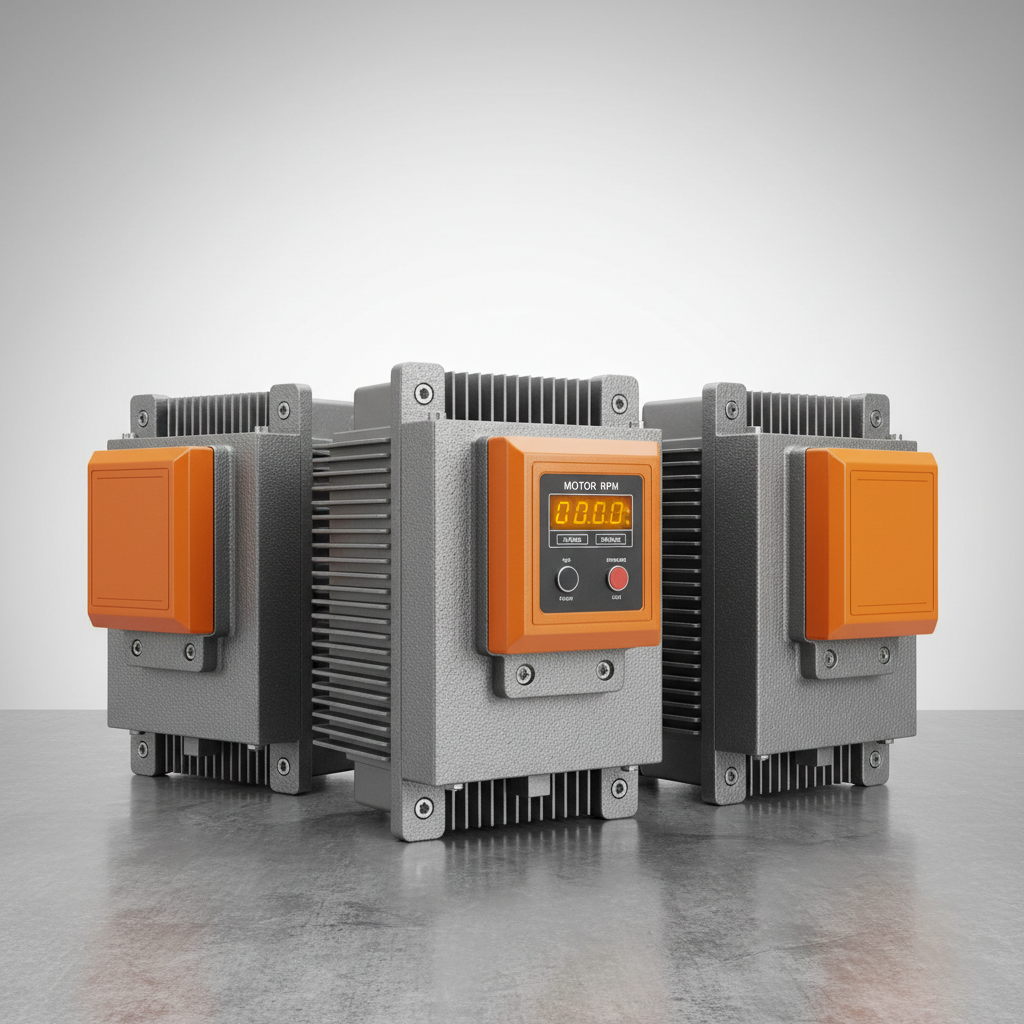
The evolution of industrial automation has placed a significant emphasis on precise control and output management. In the modern manufacturing landscape, the ability to interface digital controllers with physical actuators is paramount, often requiring robust digital output modules that can handle various voltage and current specifications to ensure system stability.
Across the globe, the integration of high-performance digital output modules allows for the seamless orchestration of complex machinery. By providing reliable switching capabilities for a variety of industrial components, these modules bridge the gap between logic processing and physical execution, reducing downtime and increasing overall operational efficiency.
Understanding the synergy between control modules and a variable drive motor system is essential for engineers aiming to optimize energy consumption and precision. Whether managing small relays or high-power contactors, the right hardware selection ensures that your automation architecture remains scalable and resilient.
Global Impact of Digital Output Integration
The global shift toward Industry 4.0 has necessitated a transition from rigid mechanical systems to flexible, software-defined automation. Digital output modules play a critical role in this transformation, enabling precise control over the electrical signals that drive everything from simple indicator lights to complex variable drive motor controllers.
As international standards for safety and efficiency evolve, the demand for reliable switching components has surged. By utilizing modular output solutions, factories can rapidly adapt their production lines to meet changing market demands while maintaining a high degree of reliability and safety in high-voltage environments.
Defining the Role of SM322 Modules
SM322 digital output modules serve as the critical execution layer of a Programmable Logic Controller (PLC) system. Their primary function is to convert logical "on/off" signals from the CPU into physical electrical currents that can trigger external devices. This allows a centralized intelligence to manage a wide array of peripheral hardware across a factory floor.
In practical terms, these modules act as the "hands" of the automation system. Without an efficient output interface, the complex calculations performed by an S7-1200 or S7-1500 controller would have no way to affect the physical world, making them indispensable for any operation involving actuators, valves, or signal lamps.
The versatility of these modules is seen in their varying channel counts and voltage ratings. Whether a system requires a high density of low-power 24V DC signals or a smaller number of high-power 230V AC outputs, the SM322 series provides the necessary flexibility to integrate with various types of electrical loads.
Core Technical Components and Specifications
The technical effectiveness of an automation system depends heavily on the precision of its output components. For instance, the SM322 DO 16x24V DC/0.5A model provides 16 discrete channels, each capable of delivering 0.5A, making it ideal for triggering relays that might eventually control a variable drive motor setup.
For more demanding power requirements, the SM322 DO 8x230V AC/2A offers 8 channels with a substantial 2A capacity per channel. This allows the system to directly drive AC-powered contactors and solenoids without the need for intermediate relay stations, simplifying the wiring and reducing potential points of failure.
High-density requirements are addressed by the SM322 DO 32x24V DC/0.5A, which doubles the channel count to 32. This scalability ensures that as a facility grows and adds more sensors and actuators, the control architecture can expand without requiring a complete overhaul of the PLC rack.
Scalability and Performance Metrics
When evaluating the performance of digital output modules, engineers look at channel density and current load capacity. The ability to select between 8, 16, or 32 channels allows for an optimized footprint within the electrical cabinet, ensuring that space is used efficiently while maintaining enough headroom for future expansions.
Reliability in switching is another key metric, especially when the output is used to drive critical safety alarms or solenoid valves. Ensuring that the current rating (0.5A for DC or 2A for AC) matches the load prevents overheating and extends the lifespan of the hardware.
Comparison of Digital Output Capacity
Real-World Application Scenarios
In a typical automated assembly line, SM322 modules are used to control the switch of relays and contactors. For example, a signal from the PLC can trigger a 24V DC output to activate a relay, which in turn starts a variable drive motor for a conveyor belt, ensuring that products move at the precise speed required for quality inspection.
Beyond motion control, these modules are essential for system feedback and safety. They are frequently used to drive indicator lights and alarm systems, providing operators with real-time visual cues regarding the state of the machinery. In the event of a fault, a high-voltage 230V AC output can trigger a heavy-duty siren to ensure immediate attention in loud industrial environments.
Long-Term Operational Value
Investing in high-quality digital output modules translates to a significant reduction in Total Cost of Ownership (TCO). By choosing modules with appropriate current ratings, such as the 2A AC output for heavy loads, companies avoid the frequent replacement of under-rated components and the costly downtime associated with hardware failure.
From a sustainability perspective, the ability to precisely control the activation of solenoid valves and contactors reduces energy waste. When integrated with a variable drive motor, the system can ensure that power is only consumed when absolutely necessary, aligning with global green energy initiatives.
Moreover, the modular nature of the SM322 series provides a sense of security for facility managers. The ease of swapping a faulty module without rewiring the entire control panel ensures that production can resume quickly, maintaining the trust of clients and stakeholders through consistent delivery schedules.
Future Trends in Automation Interface
The future of industrial interfaces is moving toward deeper integration with the Internet of Things (IoT). We are seeing a trend where digital output modules are no longer just "blind" switches but are becoming smarter, providing diagnostic data back to the controller to predict when a connected relay or valve is nearing the end of its life cycle.
Digital transformation is also pushing the boundaries of power density. Future iterations of output modules will likely offer even higher channel counts within the same physical footprint, allowing for more complex automation of variable drive motor arrays without increasing the size of electrical cabinets.
Sustainability will remain a driving force, with a focus on reducing the electrical leakage of output channels and improving the thermal management of high-current modules. This ensures that the transition to fully automated "dark factories" is both economically viable and environmentally responsible.
Core Analysis of Digital Output Module Specifications
| Model Variant |
Channel Count |
Output Capacity |
Primary Use Case |
| SM322 DO 16x24V |
16 Channels |
0.5A per channel |
Relay/Valve Control |
| SM322 DO 8x230V |
8 Channels |
2.0A per channel |
Heavy Contactors |
| SM322 DO 32x24V |
32 Channels |
0.5A per channel |
High-Density Logic |
| DC Interface |
Variable |
Low Current |
Indicator Lights |
| AC Interface |
Variable |
High Current |
Industrial Alarms |
| Integrated Drive |
System-wide |
Variable |
Motor Coordination |
FAQS
The primary difference lies in the output voltage and current capacity. The 24V DC modules are designed for low-power switching of relays and solenoid valves (0.5A per channel), whereas the 230V AC modules are intended for high-power loads like heavy contactors and industrial sirens (2A per channel), allowing for direct control without intermediate relays.
Generally, no. These modules are designed to control the "switch" of the equipment. For a large motor or a variable drive motor, the module should trigger a contactor or a relay, which then handles the high current required to start the motor, protecting the PLC from electrical surges.
The choice depends on your total number of output devices. If you have a complex system with many solenoid valves and indicator lights, the 32-channel model saves space in the control cabinet. If your requirements are modest, the 16-channel model is often more cost-effective and sufficient.
Exceeding the rated current can lead to overheating of the internal circuitry, which may cause the module to fail or shorten its operational lifespan. To prevent this, always use an external relay to isolate the PLC output from loads that exceed the 0.5A limit.
Yes, these modules are specifically engineered to integrate with the Siemens SIMATIC S7 family. They allow for seamless configuration via TIA Portal, ensuring that the digital outputs are correctly mapped to the logic defined in the PLC program.
By providing reliable control over alarm systems and emergency shut-off valves, these modules ensure that safety protocols are executed instantly. The use of dedicated output channels for alarm lights allows operators to identify system faults immediately, reducing the risk of accidents.
Conclusion
The strategic selection of digital output modules, such as the SM322 series, is fundamental to the success of any industrial automation project. By balancing channel density and power capacity—from the high-efficiency 24V DC options to the heavy-duty 230V AC variants—engineers can create a control system that is not only reliable but also perfectly tailored to the specific needs of their machinery, including the precise coordination of a variable drive motor.
As we look toward a future defined by IoT and sustainable manufacturing, the role of these interfaces will only grow in importance. Upgrading to modular, scalable hardware today ensures that your operations are prepared for the digital transformation of tomorrow, maximizing both productivity and long-term operational value. Visit our website: www.oukeconstruction.com