Tianjin Yongkai International Trade Co., Ltd.
0%

Table of Contents

Variable Frequency Drives (VFDs), also known as adjustable-speed drives, are revolutionizing industrial processes and energy management globally. The increasing demand for precise motor control, energy efficiency, and reduced operational costs has propelled the growth of the VFD market across diverse sectors. Understanding the different types of VFD drive is crucial for engineers, technicians, and facility managers seeking to optimize performance and reliability. This knowledge empowers informed decision-making when selecting the appropriate drive for specific applications.

The global VFD market is experiencing significant expansion, driven by factors such as stringent energy regulations, the rise of automation, and the need for optimized process control. Reports indicate a multi-billion dollar industry, with a projected continued growth rate in the coming years. (Source: Industry Research Reports). This growth underscores the importance of understanding the nuances between the types of VFD drive available, and selecting the most effective solution for a given need.

Addressing challenges in various industries, from manufacturing and HVAC to water treatment and transportation, VFDs offer a powerful solution for enhanced control and energy savings. The proliferation of smart manufacturing initiatives and the broader adoption of Industry 4.0 technologies are further fueling the demand for sophisticated VFD solutions. The different types of VFD drive cater to a wide spectrum of these evolving needs, and recognizing these distinctions is paramount to successful implementation.
Understanding the Diverse Types of VFD Drive for Optimal Industrial Performance

The Core Principles of types of vfd drive

Understanding the Diverse Types of VFD Drive for Optimal Industrial Performance

At their core, VFDs function by controlling the frequency and voltage supplied to an AC motor. This allows for precise speed and torque regulation, optimizing performance across a wide range of applications. Different types of VFD drive employ varying technologies to achieve this control, including Pulse Width Modulation (PWM) and Vector Control, each offering unique advantages.

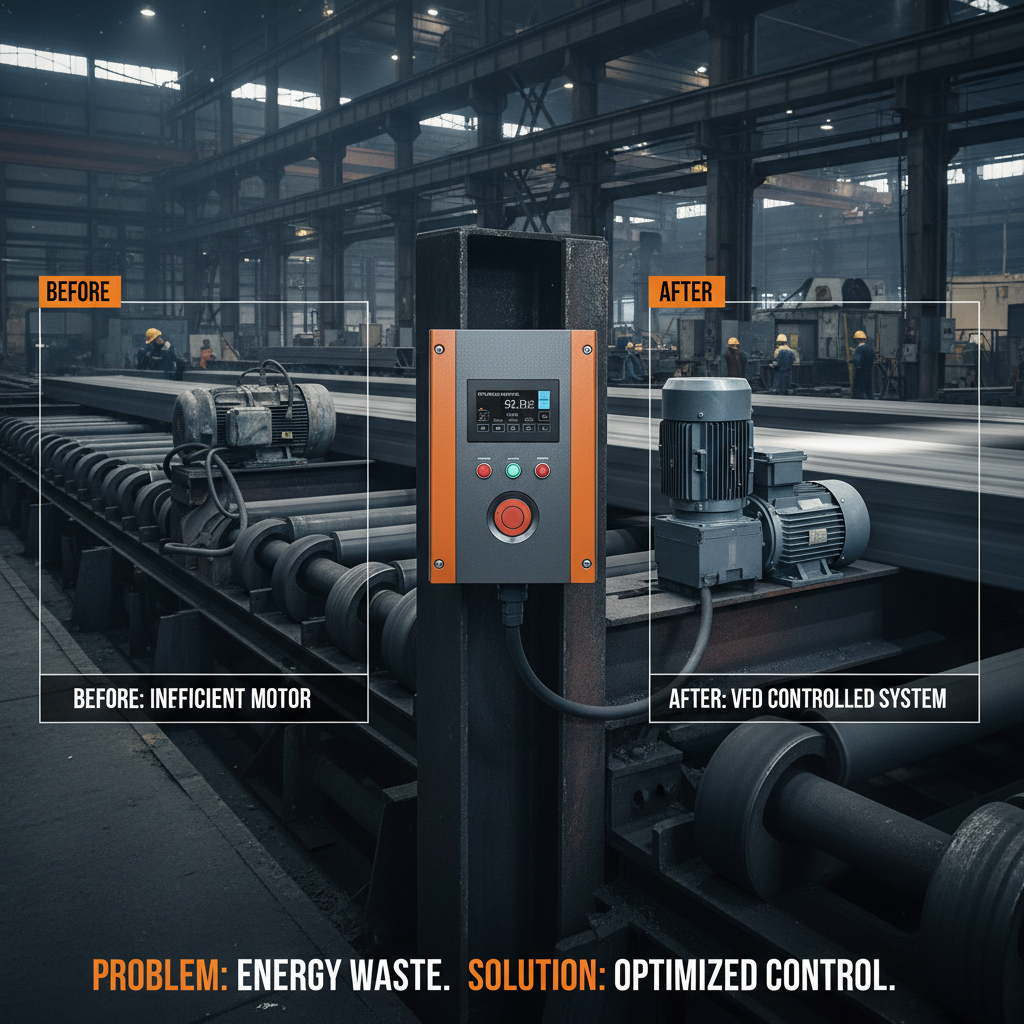
The primary goal of utilizing types of VFD drive is to enhance efficiency and reduce energy consumption. By matching motor speed to the actual demand of the application, VFDs eliminate wasted energy associated with traditional throttling methods. This translates to significant cost savings and a reduced carbon footprint, aligning with global sustainability initiatives.

The Evolution of types of vfd drive Technology

Early VFDs relied on simpler technologies like SCR (Silicon Controlled Rectifier) drives, which were bulky, inefficient, and produced significant harmonic distortion. Over time, the advent of Insulated Gate Bipolar Transistors (IGBTs) and advanced microprocessors dramatically improved VFD performance, reducing size, increasing efficiency, and enhancing control capabilities.

The evolution has led to specialized types of VFD drive designed for specific applications. For example, high-performance vector drives are optimized for demanding tasks requiring precise torque control, while simpler scalar drives are suitable for less critical applications. This specialization is crucial for maximizing return on investment.

Modern VFDs also integrate advanced features such as communication protocols (Ethernet/IP, Modbus), built-in protection functions, and remote monitoring capabilities, making them integral components of smart industrial systems.

Key Performance Indicators of types of vfd drive

Evaluating the performance of types of VFD drive requires considering several key performance indicators (KPIs). These include efficiency (input-to-output power ratio), harmonic distortion (THD – Total Harmonic Distortion), overload capacity, and response time. A higher efficiency reduces energy waste, while lower harmonic distortion minimizes interference with other electrical equipment.

Another critical KPI is the VFD’s ability to handle varying load conditions. Overload capacity refers to the drive’s ability to withstand temporary spikes in motor current without tripping. Response time, or how quickly the drive can adjust motor speed, is essential for applications requiring precise and dynamic control.

The reliability and lifespan of the types of VFD drive are also important KPIs, particularly in critical applications where downtime can be costly. Factors like component quality, thermal management, and environmental protection contribute to long-term reliability.

Comparative Analysis of types of vfd drive

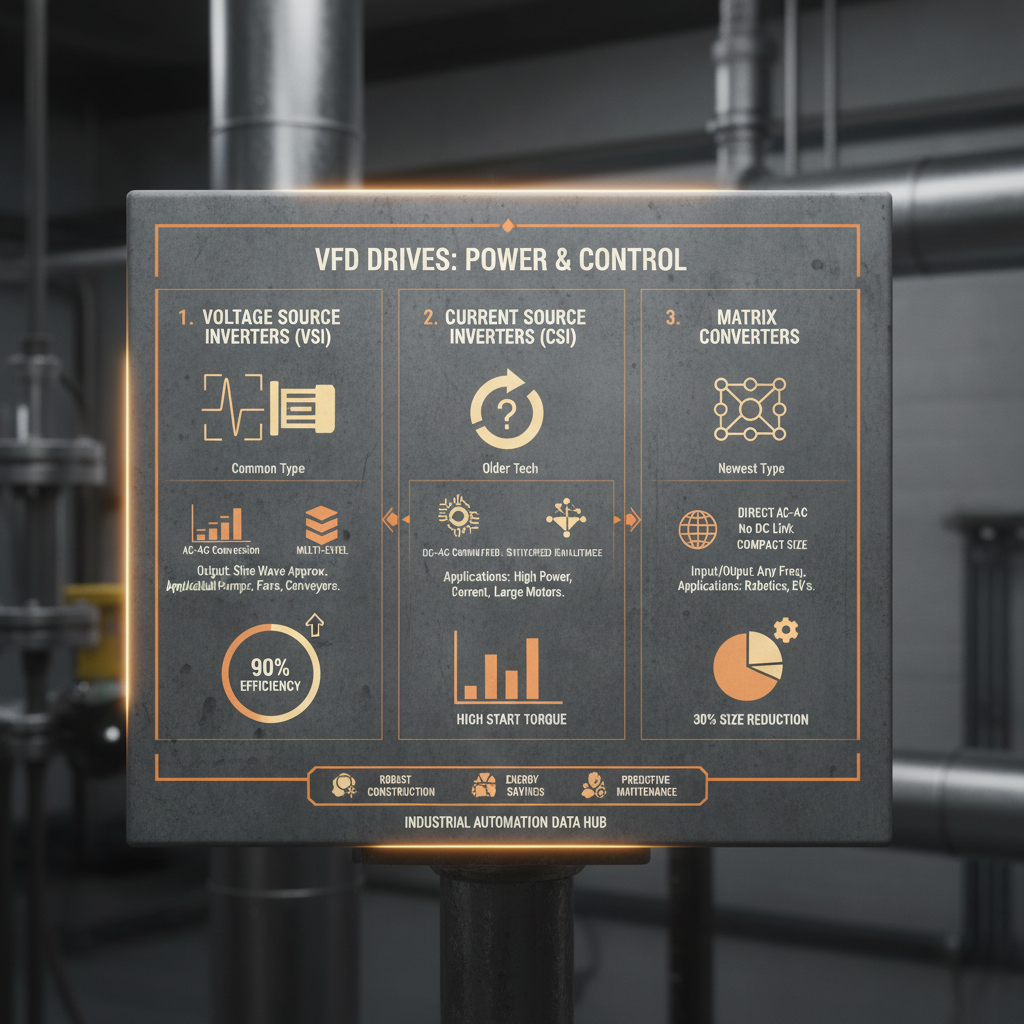
The landscape of types of VFD drive is diverse, with each offering unique capabilities and suitability for specific applications. Scalar VFDs, the most basic type, provide cost-effective speed control but lack precision in torque regulation. Vector VFDs, on the other hand, deliver superior torque control and dynamic performance, making them ideal for demanding applications.

Other specialized types of VFD drive include regenerative drives, which capture and reuse energy during braking, and harmonic mitigation drives, which minimize harmonic distortion to improve power quality. The choice of drive depends heavily on the application’s requirements and budget constraints.

Comparative Performance of types of vfd drive


Global Implementation of types of vfd drive

The adoption of types of VFD drive is widespread across various industries globally. In North America and Europe, stringent energy efficiency standards and the prevalence of automation have driven significant VFD adoption in manufacturing, HVAC, and water treatment facilities.

Asia-Pacific represents a rapidly growing market for VFDs, fueled by rapid industrialization and infrastructure development in countries like China and India. These regions are witnessing increasing demand for VFDs in sectors such as oil and gas, power generation, and transportation.

The Economic Benefits of types of vfd drive

Implementing types of VFD drive yields substantial economic benefits. Reduced energy consumption translates directly into lower operating costs. Furthermore, VFDs minimize mechanical stress on motors and driven equipment, extending their lifespan and reducing maintenance expenses.

The improved process control offered by VFDs can also enhance product quality and increase production efficiency. These combined factors contribute to a significant return on investment, making VFDs a compelling economic solution for many industrial applications.

Beyond direct cost savings, the use of VFDs can qualify businesses for energy efficiency incentives and rebates offered by governments and utilities, further enhancing their economic viability.

Future Outlook for types of vfd drive

The future of types of VFD drive is inextricably linked to the ongoing trends of digitalization and sustainability. Advancements in power electronics, particularly the use of wide-bandgap semiconductors like silicon carbide (SiC) and gallium nitride (GaN), promise even greater efficiency and power density.

The integration of VFDs with Industrial Internet of Things (IIoT) platforms will enable predictive maintenance, remote diagnostics, and optimized energy management. Artificial intelligence (AI) and machine learning (ML) algorithms will further enhance VFD performance by automatically adjusting parameters to maximize efficiency and minimize downtime.

We can also anticipate increased adoption of modular VFD designs, providing greater flexibility and scalability for evolving applications. These innovations will cement the role of VFDs as essential components of smart and sustainable industrial systems.

Summary of Key Attributes of Different types of vfd drive

Drive Type Torque Control Efficiency Rating (1-10) Typical Application
Scalar VFD Basic 6 Simple Pump Control
Vector VFD Precise 8 Conveyor Systems
Regenerative VFD Advanced 9 Elevators and Cranes
Harmonic Mitigation VFD Moderate 7 Sensitive Electronic Environments
Torque Control VFD Highly Precise 10 Extruders and Winding Machines
Direct Torque Control (DTC) VFD Very Precise 8.5 High-Performance Applications

FAQS

What are the main differences between scalar and vector VFDs?

Scalar VFDs, also known as voltage/frequency control drives, are simpler and less expensive, offering basic speed control by varying voltage and frequency in a proportional manner. Vector VFDs, however, offer precise torque control across the entire speed range by controlling both the magnitude and direction of motor current. This makes them ideal for applications requiring high performance and dynamic response.

How can I determine the correct VFD size for my motor?

Selecting the appropriate VFD size is crucial for reliable operation. You need to consider the motor’s horsepower (HP), voltage, and full-load current (FLA). The VFD must be rated to handle at least the motor’s FLA. It’s also recommended to include a safety factor to account for potential overload conditions. Consult the VFD manufacturer’s sizing guidelines for specific recommendations.

What is harmonic distortion, and how can it be mitigated with a VFD?

Harmonic distortion is the presence of unwanted frequencies in the power supply caused by non-linear loads like VFDs. These harmonics can interfere with other equipment and reduce power quality. Harmonic mitigation techniques include using line reactors, DC chokes, and active harmonic filters, or selecting a VFD specifically designed with harmonic mitigation capabilities.

What are the benefits of using a regenerative VFD?

Regenerative VFDs capture the energy generated during braking and feed it back into the power grid, improving energy efficiency. This is particularly beneficial in applications with frequent stop-start cycles, such as elevators and cranes. Regenerative drives also reduce heat dissipation, potentially lowering cooling costs.

How do I troubleshoot common VFD issues?

Common VFD issues include overcurrent faults, overvoltage faults, and communication errors. Troubleshooting often involves checking the motor wiring, input power supply, and drive parameters. Refer to the VFD’s user manual for specific troubleshooting steps and error code interpretations. Professional assistance may be required for complex issues.

What are the considerations when installing a VFD in a harsh environment?

Harsh environments – those with high temperatures, humidity, dust, or corrosive substances – require special considerations. Use a VFD enclosure with an appropriate NEMA rating for the specific environment. Ensure proper ventilation to prevent overheating, and use sealed connectors to protect against moisture and contaminants. Regular inspection and maintenance are also crucial.

Conclusion

In conclusion, understanding the diverse types of VFD drive is paramount for optimizing industrial processes, enhancing energy efficiency, and reducing operational costs. From basic scalar drives to advanced vector and regenerative drives, the choice of VFD depends on specific application requirements and budgetary constraints. Embracing these technologies is no longer simply a matter of efficiency, but a key enabler for sustainable industrial practices.

As technology continues to evolve, the future of VFDs is bright, with advancements in power electronics, digitalization, and AI promising even greater performance and integration. Investing in the right types of VFD drive today will position businesses for long-term success in an increasingly competitive and environmentally conscious world. Visit our website at www.tianjinyongkai.com to explore our comprehensive range of VFD solutions and discover how we can help you optimize your operations.
Charles Wilson

Charles Wilson

Charles Wilson is a dedicated Customer Relations Manager for Tianjin Yongkai International Trade Co., Ltd. He serves as the primary point of contact for US clients, addressing inquiries, resolving issues, and ensuring a seamless customer experience. Charles is known for his strong communication skills and his commitment to building lasting
Previous Exploring Variable Frequency Drive Types for Optimized Industrial Control
Next Exploring the Diverse Types of Variable Frequency Drive for Industrial Applications

If you are interested in our products, you can choose to leave your information here, and we will be in touch with you shortly.


vfd manufacturers in china