Variable Frequency Drives (VFDs), also known as adjustable speed drives, are becoming increasingly crucial in modern industrial applications and beyond. Different types of VFD cater to diverse needs, from simple motor control to complex energy optimization strategies. Understanding the nuances of these various types – their capabilities, limitations, and applications – is essential for engineers, technicians, and facility managers aiming to improve efficiency, reduce costs, and enhance system reliability. The global demand for VFDs is steadily increasing, driven by the need for energy conservation and precise process control.
The proliferation of automation across industries such as manufacturing, HVAC, water treatment, and transportation fuels the growth of the VFD market. According to industry reports, the global VFD market is projected to reach substantial figures in the coming years, signifying its importance in modernizing industrial infrastructure. This growth isn’t just about replacing older systems; it’s about enabling new capabilities and optimizing existing ones, making VFDs a cornerstone of Industry 4.0 initiatives.
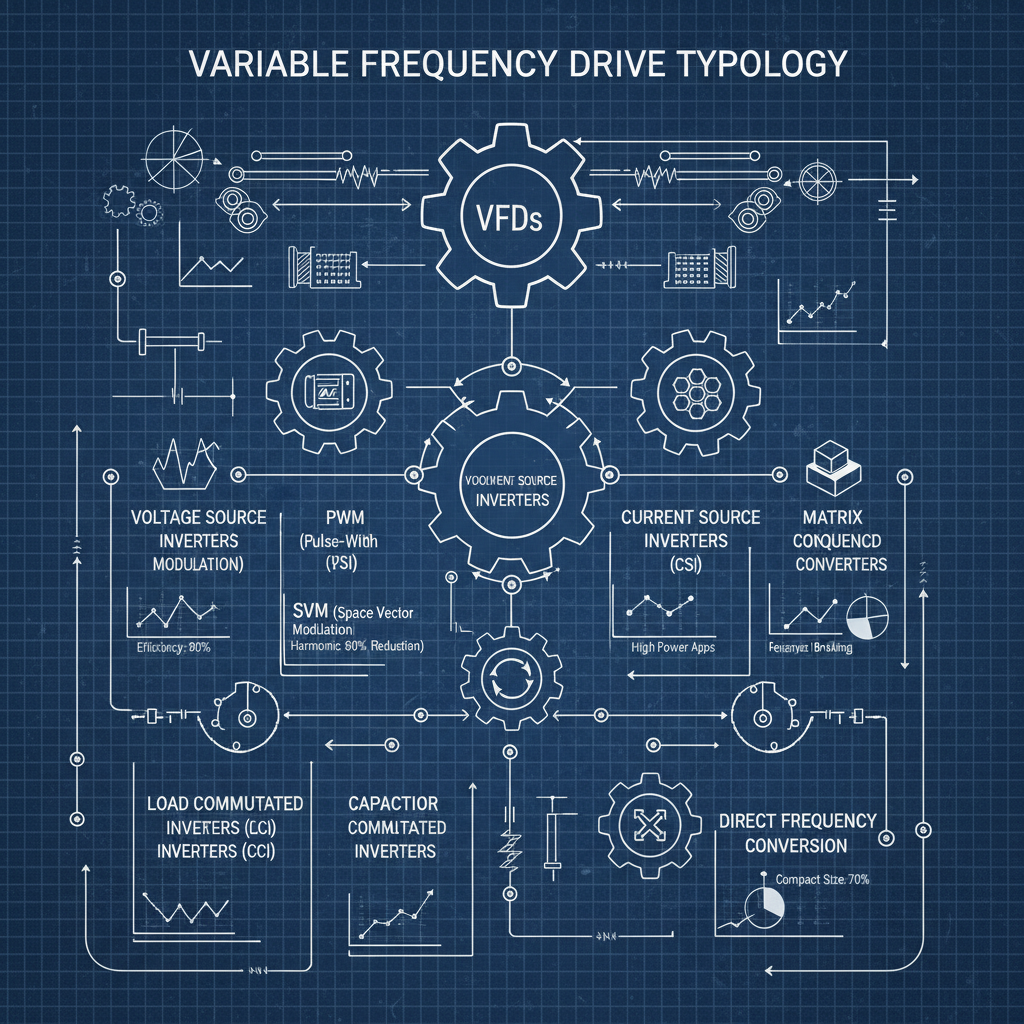
Choosing the right type of VFD isn't always straightforward. Factors like motor size, application demands, environmental conditions, and budget constraints all play a role. This necessitates a deep understanding of the different types of VFD available, ensuring optimal performance and longevity of the system. From scalar VFDs to vector VFDs, and even specialized designs, each type offers unique characteristics suited to specific applications.
Introduction to different types of vfd
At their core, VFDs regulate the speed of an AC induction motor by varying the frequency and voltage supplied to the motor. Different types of VFD achieve this control using various techniques, each with its own strengths and weaknesses. While the fundamental principle remains the same, the sophistication of the control algorithm and the components used can significantly impact performance, efficiency, and cost. different types of vfd offer a spectrum of choices for engineers.
Understanding these differences is crucial when selecting a VFD for a specific application. For instance, a simple scalar VFD might be sufficient for controlling a pump or fan, whereas a more advanced vector VFD might be necessary for precise positioning or torque control in robotic systems. As technology evolves, new types of VFD are continuously being developed to meet the demands of increasingly complex industrial processes.
Scalar VFDs: The Basics
Scalar VFDs, also known as voltage/frequency (V/f) control VFDs, represent the simplest and most cost-effective type of VFD. They operate on the principle of maintaining a constant ratio between voltage and frequency. By reducing the frequency supplied to the motor, the speed decreases proportionally, while the voltage is adjusted to maintain the desired magnetic flux. This method is suitable for applications where precise speed regulation isn't critical, such as fans, pumps, and conveyors.
The simplicity of scalar VFDs translates to lower costs and easier maintenance. However, they lack the dynamic response capabilities of more advanced VFDs. Performance can be compromised under varying load conditions, and they may exhibit issues with torque ripple and instability at low speeds. While not suitable for high-performance applications, scalar VFDs remain a popular choice for basic speed control needs.
Despite their limitations, scalar VFDs still constitute a significant portion of the VFD market, particularly in applications where energy savings are the primary goal and precise control is not paramount. Continued improvements in component technology are gradually enhancing the performance of scalar VFDs, making them an increasingly attractive option for a wider range of applications.
Vector VFDs: Precision Control
Vector VFDs, also known as field-oriented control (FOC) VFDs, provide significantly more precise control over motor speed and torque compared to scalar VFDs. They achieve this by independently controlling the motor’s magnetic flux and torque-producing current components. This allows for dynamic response, consistent torque over a wide speed range, and improved efficiency, making them ideal for demanding applications like robotics, machine tools, and high-performance pumps.
The key to vector control lies in the mathematical transformation of stator currents into rotating reference frame components (d-q axes). This enables the VFD to accurately control the motor’s magnetic field orientation and torque, regardless of the load. While more complex and expensive than scalar VFDs, vector VFDs deliver superior performance and efficiency in applications requiring precise control and dynamic response.
Vector VFDs come in two main flavors: open-loop vector control and closed-loop vector control. Open-loop vector control relies on accurate motor parameters, while closed-loop utilizes feedback from an encoder to provide even greater accuracy and stability. The choice between the two depends on the specific application requirements and budget constraints.
Direct Torque Control (DTC) VFDs
Direct Torque Control (DTC) VFDs represent an alternative to vector control, offering similar levels of performance without the complex mathematical transformations. DTC directly controls the motor’s torque and flux by switching the inverter’s power devices based on real-time measurements of motor voltage and current. This results in fast dynamic response, precise torque control, and reduced sensitivity to motor parameter variations.
DTC VFDs are particularly well-suited for applications requiring rapid acceleration and deceleration, such as cranes, hoists, and rolling mills. They offer a simpler control algorithm compared to vector control, potentially reducing development time and costs. However, DTC VFDs can sometimes exhibit higher torque ripple and acoustic noise compared to vector control systems.
Performance Comparison of different types of vfd
Specialized VFDs: Applications & Trends
Beyond the core types, several specialized VFDs cater to specific applications. Regenerative VFDs, for example, capture energy during braking and feed it back into the power grid, enhancing energy efficiency. Sine wave VFDs offer smoother output waveforms, reducing motor heating and improving performance in sensitive applications. Harmonic mitigation VFDs minimize harmonic distortion, preventing interference with other electrical equipment.
Emerging trends include the integration of VFDs with the Industrial Internet of Things (IIoT) for remote monitoring, predictive maintenance, and optimized control. Advancements in power semiconductor technology, such as silicon carbide (SiC) and gallium nitride (GaN), are enabling smaller, more efficient, and more reliable VFD designs. different types of vfd are constantly evolving.
Global Applications of different types of vfd
The applications of VFDs are widespread and diverse. In manufacturing, they control conveyor systems, pumps, fans, and machine tools, optimizing production processes and reducing energy consumption. In HVAC systems, VFDs regulate fan and pump speeds, maintaining comfortable indoor environments while minimizing energy waste. Water and wastewater treatment plants utilize VFDs to control pump and blower speeds, optimizing flow rates and chemical dosing.
Globally, VFDs are deployed extensively in industries across North America, Europe, and Asia-Pacific. Emerging economies are witnessing particularly rapid growth in VFD adoption due to increasing industrialization and a growing focus on energy efficiency. From large-scale industrial facilities to smaller commercial buildings, VFDs are playing a crucial role in reducing energy costs, improving process control, and enhancing system reliability.
In remote industrial zones lacking robust grid infrastructure, VFDs coupled with renewable energy sources, like solar power, provide a sustainable and reliable power solution for critical applications. Furthermore, in post-disaster relief operations, portable VFDs can quickly restore essential services, such as water pumping and ventilation, in affected areas.
Advantages and Future Outlook for different types of vfd
The advantages of utilizing different types of VFD are numerous and compelling. Significant energy savings are achieved by optimizing motor speed to match the actual load demand. Reduced mechanical stress on equipment extends its lifespan and lowers maintenance costs. Improved process control enhances product quality and increases efficiency. Furthermore, VFDs contribute to power factor correction, reducing energy costs and improving grid stability.
Looking ahead, the future of VFDs is bright. Continued advancements in power electronics, control algorithms, and communication technologies will drive further innovation. The integration of artificial intelligence (AI) and machine learning (ML) will enable predictive maintenance, optimized control strategies, and enhanced system performance. The increasing adoption of renewable energy sources will also drive demand for VFDs that can seamlessly integrate with distributed generation systems.
The long-term value proposition of VFDs extends beyond cost savings and efficiency gains. By contributing to a more sustainable and reliable energy infrastructure, VFDs play a crucial role in protecting the environment and fostering economic growth. As industries embrace digital transformation and prioritize sustainability, the demand for sophisticated and versatile VFDs will continue to grow.
Summary of Key Features and Applications of Different VFD Types
| VFD Type |
Control Complexity |
Cost |
Typical Applications |
| Scalar VFD |
Low |
$500 - $1500 |
Fans, Pumps, Conveyors |
| Vector VFD |
Medium |
$1500 - $4000 |
Robotics, Machine Tools, High-Performance Pumps |
| DTC VFD |
Medium |
$2000 - $5000 |
Cranes, Hoists, Rolling Mills |
| Sensorless Vector VFD |
High |
$3000 - $6000 |
Applications requiring precision without encoders |
| Regenerative VFD |
Medium-High |
$2500 - $7000 |
Applications with frequent braking |
| Harmonic Mitigation VFD |
High |
$4000+ |
Sensitive electronic equipment environments |
FAQS
The primary difference lies in the control method. Scalar VFDs control voltage and frequency in a fixed ratio, suitable for simpler applications. Vector VFDs independently control torque and flux, providing precise speed control and dynamic response, ideal for demanding tasks like robotics and machine tools. The cost and complexity are significantly higher for vector VFDs but the performance benefits can be substantial.
Selecting the correct VFD size is critical. You need to ensure the VFD’s voltage and current ratings exceed the motor’s nameplate values. Consider the motor's full-load amps (FLA) and service factor. It's generally recommended to choose a VFD with a FLA rating at least 125% of the motor’s FLA to accommodate potential overload conditions. Ignoring these factors can lead to VFD failure or motor damage.
Harmonics are distortions of the sinusoidal waveform of the AC power supply caused by non-linear loads like VFDs. These harmonics can cause overheating of transformers, neutral conductors, and other equipment, as well as interference with sensitive electronic devices. Harmonic mitigation VFDs include filters or other technologies to reduce harmonic distortion, protecting the power system and ensuring reliable operation.
While VFDs are predominantly used with AC induction motors, compatibility depends on the motor design. Some older motors may require modifications or be unsuitable for VFD operation due to insulation issues or harmonic distortion. It's crucial to verify motor compatibility before installing a VFD. Newer inverter-duty motors are specifically designed for use with VFDs and offer enhanced performance and reliability.
Regenerative VFDs capture energy generated during braking and return it to the power grid or a DC bus. This significantly improves energy efficiency, especially in applications with frequent stopping and starting, like elevators or cranes. This energy recovery reduces overall energy costs and minimizes heat dissipation, contributing to a more sustainable operation.
Common VFD issues include overcurrent faults, overvoltage faults, and communication errors. Start by checking the motor wiring, input voltage, and grounding connections. Review the VFD’s error log for specific fault codes and consult the manufacturer's documentation. Ensure proper heat dissipation and adequate ventilation. If the problem persists, contact a qualified VFD technician for assistance.
Conclusion
Different types of VFD offer a spectrum of control capabilities, from basic speed regulation to precise torque control and energy recovery. Understanding the nuances of each type – scalar, vector, DTC, and specialized VFDs – is crucial for optimizing performance, reducing energy consumption, and enhancing system reliability. As industries continue to embrace automation and sustainability, the importance of VFDs will only grow.
Looking forward, the integration of VFDs with emerging technologies like AI, IIoT, and advanced power semiconductors will drive further innovation and unlock new possibilities. By proactively embracing these advancements, businesses can unlock significant cost savings, improve process efficiency, and contribute to a more sustainable future. Visit our website at www.tianjinyongkai.com to explore our range of VFD solutions and discover how we can help you optimize your operations.