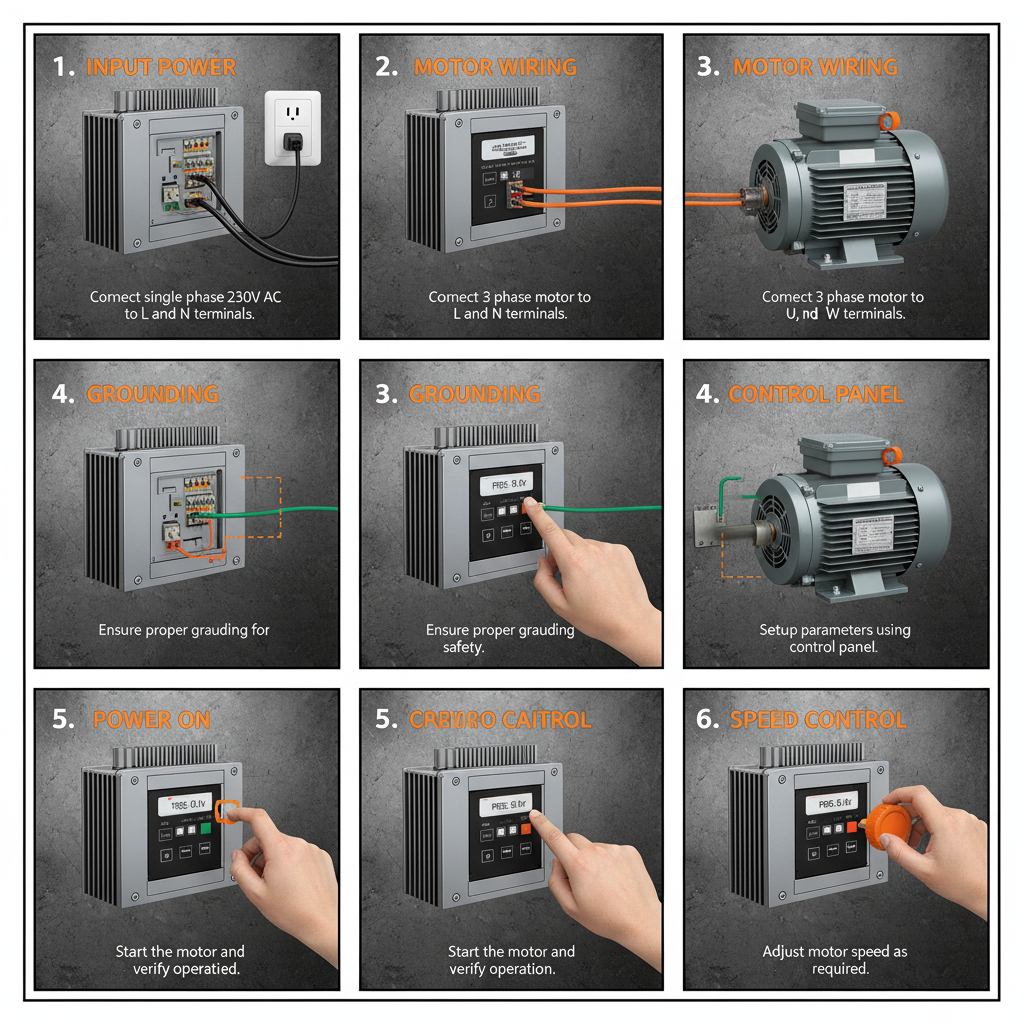
Variable speed drives (VSDs), also known as adjustable frequency drives (AFDs), are revolutionizing how we control electric motors across a vast spectrum of industries. These sophisticated devices optimize motor speed and torque, leading to significant energy savings, enhanced process control, and prolonged equipment life. Understanding the different variable speed drive types available is crucial for engineers, facility managers, and anyone involved in industrial automation and energy management. Their growing importance stems from a global push for energy efficiency and the increasing complexity of modern industrial processes.
Globally, the demand for VSDs is surging, driven by stringent energy efficiency regulations and a growing awareness of operational cost reduction. According to a recent report by the UN Environment Programme, widespread VSD adoption could reduce global electricity consumption by up to 30%. The ISO 50001 energy management standard further encourages businesses to implement energy-saving technologies like VSDs. This demand is particularly pronounced in developing nations striving for industrial growth while minimizing environmental impact. A key challenge addressed by VSDs is the inefficient operation of fixed-speed motors, which often consume energy even when operating below their optimal capacity.
At its core, a variable speed drive adjusts the frequency of the electrical power supplied to an electric motor. This allows the motor's speed to be precisely controlled, matching the application's actual needs. Unlike traditional methods like dampers or valves that waste energy, VSDs directly control the motor’s speed, resulting in substantial energy savings. This technology is increasingly vital in modern industry and plays a role in addressing humanitarian needs by optimizing resource utilization and enhancing the reliability of critical infrastructure.
Introduction to Variable Speed Drive Types
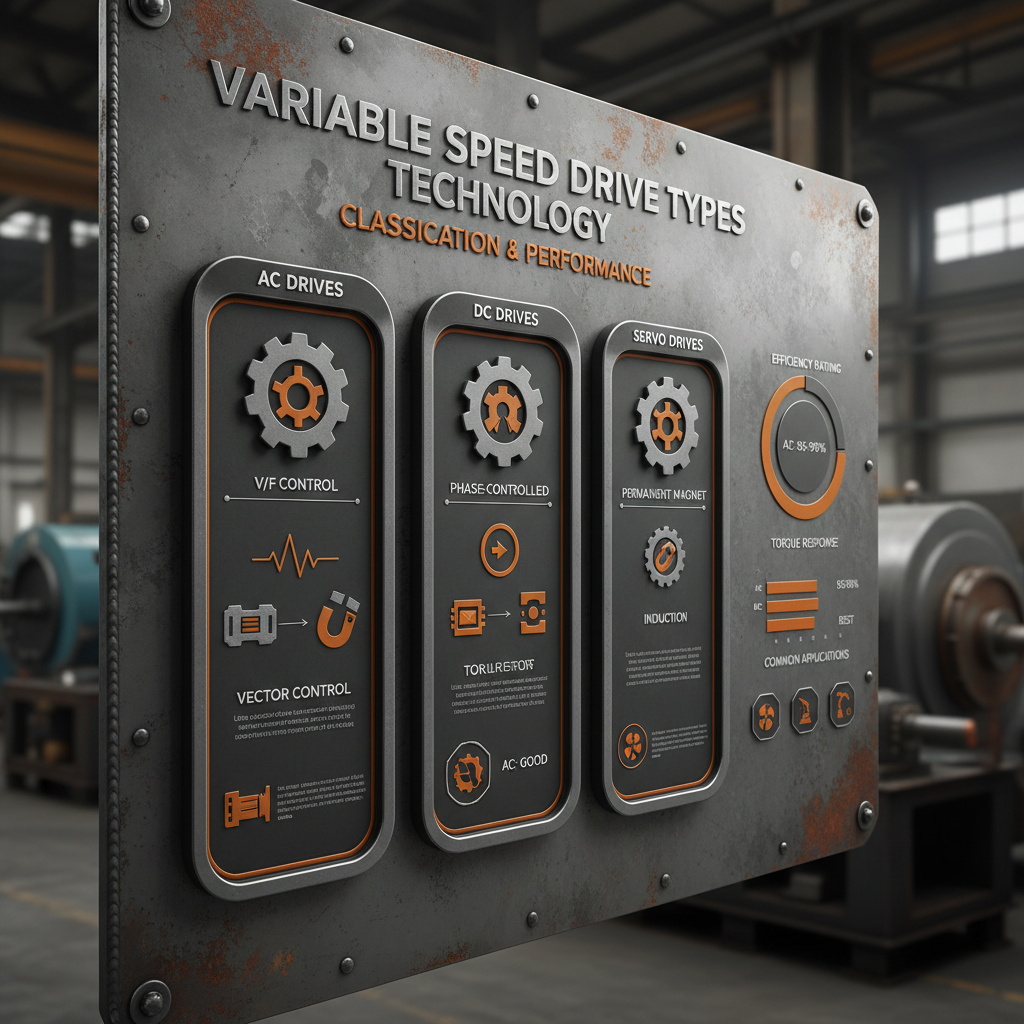
The landscape of variable speed drive types is diverse, reflecting the wide range of applications they serve. From simple scalar VSDs to sophisticated vector drives and direct torque control systems, each type offers a unique balance of performance, cost, and complexity. Understanding these distinctions is vital for selecting the optimal drive for a specific application. The core principle remains consistent: precise control of motor speed to maximize efficiency and optimize process performance.
Selecting the correct variable speed drive types involves carefully considering factors such as motor type, load characteristics, required accuracy, and environmental conditions. Different industries, like HVAC, pumping, and manufacturing, demand varying levels of control and performance. Investing in the appropriate VSD can lead to substantial long-term savings, improved product quality, and a reduced carbon footprint.
Defining Variable Speed Drive Types
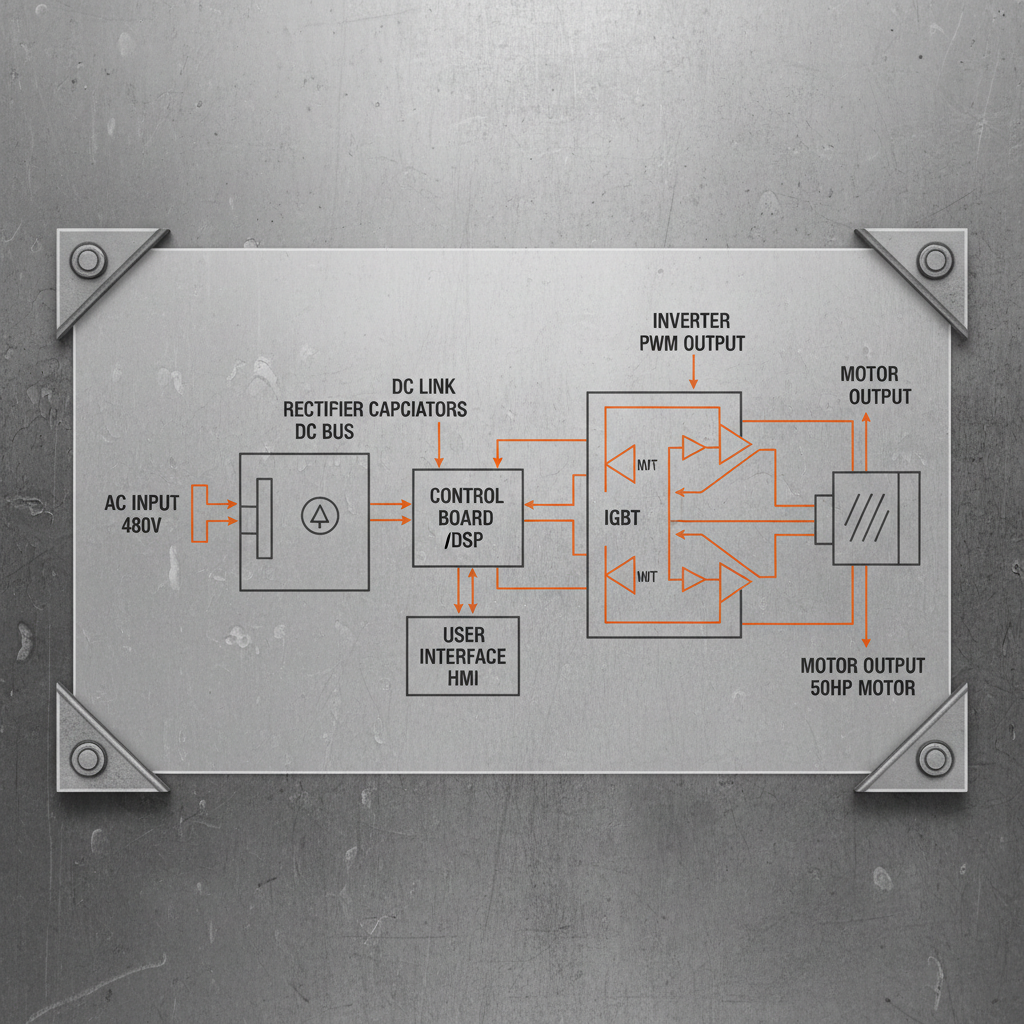
A variable speed drive (VSD) is an electronic device used to control the speed of an AC electric motor by varying the frequency and voltage supplied to the motor. Traditional motor control methods often involve mechanical means like gears or dampers, which are inherently inefficient. VSDs, conversely, offer precise electronic control, enabling motors to operate at the exact speed required for the application, thereby minimizing energy waste. This makes them essential components in modern industrial automation systems.
The connection to modern industry is undeniable. VSDs are integral to optimizing processes in sectors such as manufacturing, oil and gas, water treatment, and building automation. Their ability to regulate motor speed translates directly into cost savings, improved product quality, and reduced environmental impact. The rise of Industry 4.0 and the Industrial Internet of Things (IIoT) is further driving the adoption of VSDs, as they provide valuable data for predictive maintenance and process optimization.
In humanitarian contexts, VSDs play a critical role in ensuring the reliable operation of essential infrastructure. For example, in water purification plants, VSDs can precisely control pump speeds to optimize water flow and minimize energy consumption, crucial in regions with limited resources. Similarly, in disaster relief operations, VSDs can power generators and pumps with greater efficiency, extending their runtime and maximizing their impact.
Key Factors in Variable Speed Drive Types
Several key factors differentiate various variable speed drive types and influence their suitability for different applications. First, performance is a critical consideration. Vector drives offer superior performance for applications requiring precise speed and torque control, while scalar drives are more cost-effective for simpler applications. Secondly, environmental resilience is vital, especially in harsh industrial environments. Drives must be able to withstand extreme temperatures, humidity, and electromagnetic interference.
Thirdly, scalability is crucial for future-proofing investments. Choosing a drive that can accommodate potential process expansions or upgrades is essential. Fourth, cost-efficiency encompasses not only the initial purchase price but also operating costs, including energy consumption and maintenance requirements. A higher initial investment in a more efficient drive can often yield significant long-term savings. Finally, communication capabilities are becoming increasingly important as VSDs integrate into larger automation systems, enabling remote monitoring and control.
These factors directly relate to practical applications. For instance, in a high-precision manufacturing process, a vector drive’s superior performance is essential for maintaining product quality. In a wastewater treatment plant, a rugged and environmentally resilient drive is critical for reliable operation in a harsh environment. And in a large industrial facility, the scalability and communication capabilities of a drive are vital for seamless integration into a plant-wide automation system.
Global Applications of Variable Speed Drive Types
The applications of variable speed drive types are truly global and span across numerous industries. In the oil and gas sector, VSDs control pumps and compressors, optimizing energy consumption and ensuring reliable operation of pipelines and processing facilities. The HVAC industry heavily relies on VSDs to regulate fan and pump speeds in building automation systems, significantly reducing energy costs and improving occupant comfort.
Manufacturing processes, from conveyor systems to machine tools, benefit immensely from the precise speed control offered by VSDs, leading to improved product quality and increased productivity. In water and wastewater treatment plants, VSDs optimize pump performance, minimizing energy usage and ensuring consistent water quality. The mining industry utilizes VSDs to control large motors in crushers and conveyors, increasing efficiency and reducing wear and tear.
These technologies are deployed globally, with significant growth seen in emerging economies like China and India, where rapid industrialization is driving demand for energy-efficient solutions. In remote industrial zones, where grid stability is a concern, VSDs help stabilize power networks and ensure reliable operation of critical equipment. In post-disaster relief operations, portable VSDs can power emergency equipment, providing essential services to affected communities.
Performance Comparison of Variable Speed Drive Types
Advantages & Long-Term Value of Variable Speed Drive Types
The advantages of utilizing variable speed drive types extend far beyond mere energy savings. Tangible benefits include reduced electricity bills, lower maintenance costs due to decreased mechanical stress on equipment, and increased process efficiency. Furthermore, VSDs often enhance power factor correction, reducing penalties from utility companies. The extended lifespan of motors controlled by VSDs adds significantly to the long-term return on investment.
The long-term value proposition is compelling. From a sustainability perspective, reduced energy consumption translates into a smaller carbon footprint and contributes to environmental responsibility. From a social impact standpoint, VSDs can improve working conditions by reducing noise levels and vibrations. Logically, the increased reliability and uptime of equipment directly impact profitability. Emotionally, knowing you're contributing to a more sustainable future fosters a sense of purpose and innovation.
Future Trends in Variable Speed Drive Types
The future of variable speed drive types is inextricably linked to advancements in digital transformation, green energy technologies, and automation. We're seeing a growing trend towards intelligent drives with integrated IoT capabilities, enabling predictive maintenance and remote diagnostics. The development of more efficient power semiconductors, such as silicon carbide (SiC) and gallium nitride (GaN), is leading to smaller, more powerful, and more energy-efficient VSDs.
Integration with renewable energy sources, such as solar and wind, is also a key trend. VSDs can optimize the performance of renewable energy systems by matching motor speeds to varying energy input levels. Furthermore, the increasing adoption of Industry 5.0, which emphasizes human-centricity and resilience, will drive demand for VSDs that can adapt to dynamic and unpredictable environments.
Challenges & Solutions in Variable Speed Drive Types
Despite their numerous benefits, implementing variable speed drive types can present certain challenges. Harmonic distortion, generated by the switching action of the VSD, can interfere with other sensitive electronic equipment. Solutions include using harmonic filters and line reactors to mitigate these effects. Another challenge is the potential for motor bearing currents, which can damage bearings over time. Insulated bearings or grounding rings can address this issue.
Furthermore, proper system grounding and shielding are crucial to prevent electromagnetic interference (EMI). Selecting the correct VSD for the application and ensuring proper installation and commissioning are also essential. Expert consultation and training are vital for overcoming these challenges and maximizing the benefits of VSD technology. Advancements in drive design are continuously addressing these issues, leading to more robust and reliable systems.
Finally, cybersecurity is becoming a growing concern as VSDs become increasingly connected. Implementing robust security protocols and regularly updating firmware are essential to protect against cyber threats.
Summary of Common Challenges and Solutions in Variable Speed Drive Types
| Challenge |
Impact on System |
Solution |
Implementation Cost (1-10) |
| Harmonic Distortion |
Interference with other equipment |
Harmonic Filters, Line Reactors |
7 |
| Motor Bearing Currents |
Bearing Damage, Reduced Lifespan |
Insulated Bearings, Grounding Rings |
6 |
| Electromagnetic Interference (EMI) |
Communication Disruptions |
Proper Grounding and Shielding |
5 |
| Incorrect Drive Selection |
Suboptimal Performance, Reduced Efficiency |
Consultation with Experts |
4 |
| Improper Installation |
System Failure, Safety Hazards |
Qualified Technicians, Training |
8 |
| Cybersecurity Vulnerabilities |
System Compromise, Data Breaches |
Security Protocols, Firmware Updates |
9 |
FAQS
Scalar VSDs, also known as voltage/frequency (V/f) drives, are simpler and less expensive, primarily controlling motor voltage and frequency. They’re suitable for basic applications like fans and pumps. Vector VSDs, however, offer more precise control by manipulating both voltage and current, resulting in better speed regulation and torque control. They’re essential for demanding applications like conveyors and machine tools where accurate speed and torque are crucial.
Determining the correct VSD size involves considering the motor’s horsepower (HP) or kilowatt (kW) rating, voltage, and current. The VSD must be rated to handle the motor’s full load current and voltage. It’s generally recommended to slightly oversize the VSD to accommodate potential variations in load and ensure reliable operation. Consulting the motor manufacturer's specifications and a VSD supplier is highly recommended.
Harmonic distortion is a result of the non-linear switching action of VSDs, which introduces unwanted frequencies into the power system. These harmonics can cause overheating of transformers, misoperation of sensitive equipment, and reduced power quality. Mitigation techniques include using harmonic filters, line reactors, and active harmonic filters to absorb or cancel out the harmonic currents.
Regenerative braking captures the energy generated during deceleration and feeds it back into the power system, rather than dissipating it as heat. This significantly improves energy efficiency, reduces energy costs, and lowers the thermal stress on braking resistors. Regenerative braking is particularly beneficial in applications with frequent start-stop cycles or loads that require frequent deceleration.
VSDs can induce circulating currents in motor bearings, leading to fluting and premature failure. To mitigate this, use insulated bearings, install grounding rings on the motor shaft, or employ common-mode chokes. Proper grounding and shielding of the VSD and motor cables are also essential to minimize the risk of bearing currents.
Regular maintenance includes cleaning the VSD's cooling fans and filters, inspecting capacitors for signs of aging, and checking connections for tightness. Periodically monitor the VSD’s operating parameters, such as voltage, current, and temperature, to identify potential issues early on. Firmware updates should also be applied to ensure optimal performance and security.
Conclusion
Variable speed drive types represent a cornerstone of modern industrial efficiency and sustainability. From optimizing energy consumption and enhancing process control to extending equipment lifespan and reducing environmental impact, the benefits are substantial and far-reaching. Understanding the different drive types and their specific applications is crucial for maximizing their potential and achieving long-term operational excellence. The continued innovation in VSD technology promises even greater efficiency and integration with emerging technologies like IoT and renewable energy.
Looking ahead, embracing VSD technology is no longer simply a matter of cost savings, but a strategic imperative for organizations seeking to enhance their competitiveness, reduce their carbon footprint, and contribute to a more sustainable future. We encourage you to explore the various variable speed drive types available and contact our experts to discuss your specific application needs. Visit our website: www.tianjinyongkai.com today to learn more.